Built on the LAMP Stack
Priority Pixels builds websites on a LAMP stack of Linux, Apache, MySQL and PHP. Every website is coded in custom HTML5, CSS3 and PHP without page builders, so the code stays clean, quick to load and straightforward to maintain. The same PHP skills cover WordPress themes, plugins, integrations and the custom functionality that sits around them.
Supported Versions Only
Each PHP branch receives two years of active support followed by two years of security fixes, according to the PHP supported versions page. After that the PHP project releases nothing more for it. We keep the websites we maintain on branches that still receive security fixes and plan each move well before a branch reaches its end date, instead of waiting for a vulnerability to force it.
Hosting That Keeps PHP Patched
Our managed UK hosting runs containerised PHP with isolated resources on PHP 8 or later, with security patching, file integrity monitoring and nightly encrypted backups handled by the team that maintains the code. When a PHP security release lands, the host patch and any version upgrade are planned as one piece of work.
PHP Development Delivered by a Senior Team
Priority Pixels writes and maintains PHP for B2B and public sector websites, from version upgrades on existing WordPress builds to custom themes, plugins and integrations. W3Techs reports PHP on close to 70 percent of websites whose server programming language it can identify. Every WordPress website is among them. Audits, staging tests, upgrades and hosting are delivered by one team rather than passed between a developer, a host and a support desk.
- PHP version upgrades to supported branches
- Legacy PHP audits and remediation
- Compatibility testing on a staging copy
- Custom PHP development on a LAMP stack
- WordPress theme and plugin development
- WooCommerce PHP work and checkout testing
- Managed UK hosting with security patching
- Off site backups and uptime monitoring
When the PHP project fixed two critical vulnerabilities, CVE-2026-109618 and CVE-2026-109619, on 21 October 2026, every live website we maintain was already on PHP 8.3 or later, a branch that received the fix. We have written up what the October 2026 PHP vulnerabilities meant for website owners.


Our PHP Development Services
PHP Version Upgrades to Supported Branches
Moving a website from an old PHP branch to a current one is planned work, not a setting changed on the server. We check which branch the website runs, which branches still receive security fixes and which versions WordPress and your plugins support, then move it to PHP 8.3 or 8.4 once testing is complete. Our guide to PHP versions and which one a website should run sets out how the branches differ. PHP version upgrades are included in our WordPress support retainer.
Legacy PHP Audits and Remediation
Older websites carry code written for PHP versions that have since removed or changed functions. We audit the PHP version, theme, plugins and custom code, list what will fail on a supported branch and fix it before the upgrade, so problems surface on a test copy and not on the live website. Websites still on PHP 8.1 or older no longer receive security fixes from the PHP project. Our post on the risks of running an end of life PHP version covers what that means in practice.
Custom PHP Development on the LAMP Stack
We build on Linux, Apache, MySQL and PHP, coding websites in custom HTML5, CSS3 and PHP instead of relying on page builders. That covers custom functionality, integrations with CRMs and marketing platforms and custom API work, all part of our wider web development services. Where PHP is not the right fit for a project, we build with Python for automation and data processing or Next.js for high performance web applications.
WordPress and WooCommerce PHP Development
WordPress and WooCommerce run on PHP, so most of the PHP we write lives in custom themes, plugins and hooks. We build themes from scratch, extend WooCommerce where a store needs functionality it does not have and test checkout, payments and order emails whenever the PHP version changes, because an online shop loses sales the moment a checkout fails.
PHP Hosting and Patching Through Managed Hosting
Hosting decides which PHP versions a website can run and how quickly security releases reach it. Our managed hosting sits in a UK data centre certified to ISO 27001, runs containerised PHP with isolated resources and is patched by our own team. After the October 2026 PHP security release, the National Cyber Security Centre advised organisations that could not update or apply the temporary mitigations to consider taking affected systems offline. A supported, patched host keeps a website out of that position.
Ongoing PHP Support and Maintenance
PHP support does not stop after one upgrade. PHP 8.2 security support ends on 31 December 2026 and PHP 8.3 follows on 31 December 2027, according to the dates published by the PHP project. We track those dates, schedule the next move and keep WordPress core, plugins and themes current alongside it. Our posts on PHP 8.2 end of life and PHP 8.3 end of life explain what each deadline means for a website.
Our Web Development Case Studies
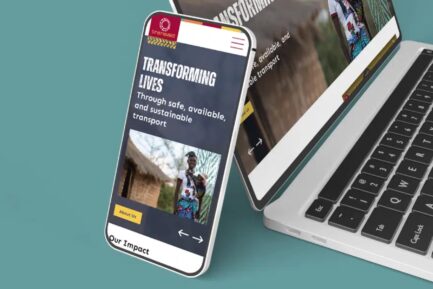
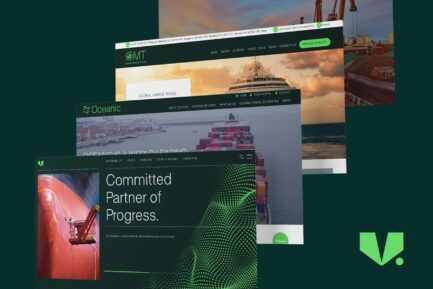
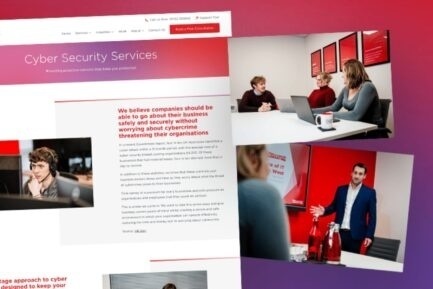
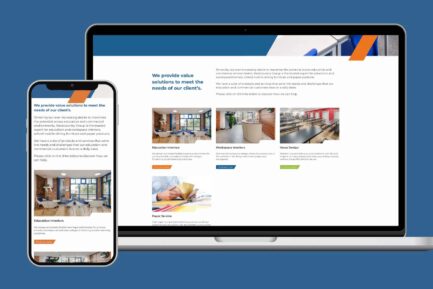
See how our web development projects have helped businesses launch high-performance, custom-built websites designed for long-term growth and scalability.







How We Approach PHP Development
A PHP version change can break plugins, themes and custom code that rely on functions removed in newer versions. Every upgrade we carry out follows the same order of work, set out in more detail in our PHP upgrade checklist, so the live website changes once and only after the new version has been proven on a copy.
Audit the Website and Its Hosting
We record the current PHP version, the hosting environment, WordPress core, every plugin and theme and any custom code. Each component is checked against the target PHP branch, so incompatible code, abandoned plugins and deprecated functions are listed before anything changes. The audit also confirms how long the current branch has left on security support.
Compatibility Testing on Staging
The website is copied to a staging environment running the new PHP version. We test forms, logins, checkout, search, integrations and scheduled tasks, read the PHP error log and fix what fails. Nothing moves to the live website until the staging copy runs cleanly.
Backup and Upgrade
A full backup of the files and database is taken immediately before the change. The live website is switched to the new PHP version at a quiet time, with the previous version ready to revert to if anything unexpected appears. Code fixes proven on staging go live alongside the switch.
Monitoring After the Upgrade
For the days after an upgrade we watch error logs, uptime and the pages that matter most to the organisation, such as enquiry forms and checkout. Our hosting is monitored around the clock, so anything testing missed is picked up quickly and fixed by the team that made the change.
Planning the Next Version
PHP branches reach the end of their support on published dates, so the next upgrade can be planned well ahead. We review the supported branches twice a year and schedule each move before security support ends, which keeps upgrades on a normal timetable instead of an emergency one.
PHP Development FAQs
What does a PHP development company do?
A PHP development company writes, upgrades and maintains the PHP code behind a website or web application. For most organisations that means WordPress themes, plugins and integrations, keeping the PHP version on a supported branch and fixing code that breaks when the version changes. Priority Pixels covers all of that alongside the hosting the code runs on.
Do you have PHP developers in the UK?
Yes. Our development team is based in the UK and works with PHP every day across custom WordPress builds, WooCommerce stores, integrations and support. The same team scopes the work, writes the code and looks after the website after launch, so there is one point of contact from start to finish.
Which PHP version should my website run?
A website should run a PHP branch that still receives security fixes. PHP 8.3, 8.4 and 8.5 have security support until the end of 2027, 2028 and 2029 in turn, while PHP 8.2 security support ends on 31 December 2026, according to the PHP supported versions page. For WordPress websites PHP 8.3 or 8.4 is the sensible target, in line with the WordPress recommendation of PHP 8.3 or greater.
How is a PHP upgrade carried out without breaking the website?
The upgrade is tested on a staging copy of the website first. Plugins, themes and custom code are checked against the new version and failures are fixed on staging. A full backup is taken and the live website is switched at a quiet time with the old version ready to revert to, then error logs and key pages are monitored for the following days.
What PHP support do you provide after launch?
Ongoing PHP support sits inside our WordPress support retainer. It covers PHP version upgrades, core, plugin and theme updates tested on staging, security hardening, malware scanning, uptime monitoring, off site backups and prioritised fixes when something breaks.
Do you provide PHP hosting?
Yes. Our managed hosting runs PHP 8 or later in containerised environments with isolated resources, in a UK data centre certified to ISO 27001. Security patches are applied by our own team and backups are taken nightly, encrypted and stored off site. Developers can be given SFTP, SSH and Git access where a project needs it.
What happens if a website runs a PHP version that is no longer supported?
The PHP project stops releasing security fixes for a branch once it reaches end of life, so any vulnerability found afterwards stays open. PHP 8.1 reached end of life on 31 December 2025 and PHP 7.4 on 28 November 2022, according to the PHP end of life list. Some hosts backport fixes to older branches, but that needs confirming in writing. The safer course is an upgrade to a supported branch.
Our Technology Partners





Our Web Design News
UX, UI, responsive design, WordPress-based delivery, accessibility and the wider craft of building websites that turn visitors into enquiries. Practical thinking from the Priority Pixels web design team, based on what actually converts for UK B2B and B2C brands.

Business Website Design: What a Good Company Website Needs
Business website design is the work of planning, designing and building a website that explains what a company does, earns the trust of the people evaluating it and gives them a clear next step. A good company website is judged less on how it looks in isolation and more on whether a buyer, candidate or […]
 Paul Clapp | 01/10/2026

Paul Clapp | 30/09/2026

Paul Clapp | 30/09/2026

Paul Clapp | 10/09/2026

Paul Clapp | 27/08/2026