






Beyond Traditional CMS
Some projects demand performance and flexibility that traditional content management systems cannot deliver. Next.js gives us server-side rendering, static site generation and API-driven architecture in a single framework. The result is web applications that load instantly and scale without compromise.
React at the Core
Next.js builds on React, giving us component-based architecture that keeps codebases maintainable as applications grow. Combined with TypeScript for type safety and Prisma for database management, we build applications that development teams can work with confidently long after launch.
Headless CMS Integration
Next.js pairs naturally with headless CMS platforms including WordPress. Your content team keeps an editor they know while the front-end delivers performance that monolithic CMS architectures struggle to match. Content updates flow through APIs without rebuilding the entire application.
Next.js Development Delivered by a Senior Team
Priority Pixels builds Next.js applications end to end. Server-side rendering, static generation, edge functions, headless CMS integration and TypeScript-first architecture are all delivered in one team rather than passed between specialists.
- Server-side rendering (SSR) for complex data requirements
- Static site generation (SSG) for content-heavy platforms
- API routes and edge functions
- TypeScript throughout, Prisma for the database layer
- Headless CMS integration with WordPress, Sanity or Contentful
- Authentication and role-based access built in
- Component libraries designed to scale as the app grows
- Deployment on Vercel or our own UK infrastructure
Every build ships with monitoring, tested backups and a documented handover, so the application we deliver stays supportable long after launch.


Our Next.js Development Services
Server-Side Rendered Applications for Complex Data Requirements
Server-side rendering delivers fully formed pages to the browser, improving load times, SEO performance and accessibility. We build SSR applications for projects that need dynamic content, personalisation or real-time data without sacrificing the page speed that search engines and users demand.
Static Site Generation for Content-Heavy Platforms
Pre-rendered static pages deliver near-instant load times and reduce server costs significantly. We use static generation for marketing sites, documentation platforms and content libraries where pages do not change on every request. Incremental static regeneration keeps content fresh without rebuilding the entire site.
Headless CMS Front-Ends with Full Editorial Control
We build Next.js front-ends powered by headless WordPress, Contentful or other CMS platforms. Your editorial team works in a familiar content editor while the front-end delivers the performance, design flexibility and interactivity that traditional themes cannot achieve.
Interactive Dashboards and Client-Facing Portals
Next.js handles data-heavy interfaces well. We build reporting dashboards, client portals and internal tools with real-time data visualisation, authentication and role-based access control. React components keep interfaces responsive even when processing large datasets.
Our Web Development Case Studies
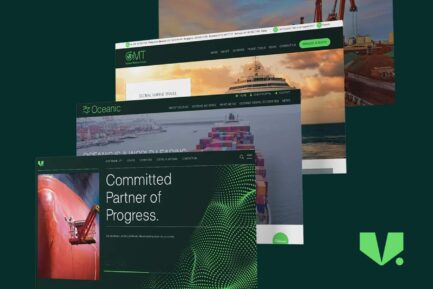
See how our web development projects have helped businesses launch high-performance, custom-built websites designed for long-term growth and scalability.










Next.js Development FAQs
When should I choose Next.js over WordPress?
Next.js suits projects that need high interactivity, real-time data, complex user interfaces or performance beyond what WordPress can deliver. Reporting dashboards, client portals, SaaS applications and data-heavy marketing sites are common use cases. If your project is primarily content-driven with straightforward editorial needs, WordPress is usually the better and more cost-effective choice.
Can Next.js work with WordPress as a headless CMS?
Yes. WordPress serves as the content management layer while Next.js handles the front-end presentation. Your editorial team continues using the WordPress editor they know while the website delivers significantly better performance through server-side rendering and static generation. We build this integration regularly.
Is Next.js good for SEO?
Next.js is excellent for SEO because server-side rendering delivers fully formed HTML to search engine crawlers. Unlike client-side React applications where content renders in the browser, Next.js pages are crawlable and indexable from the first request. Meta tags, structured data and canonical URLs are all handled at the server level.
How long does a Next.js project typically take?
A standard Next.js marketing site or portal takes 8 to 14 weeks. Complex applications with authentication, real-time data and multiple integrations take longer. We scope every project in detail so timescales are realistic and the architecture is planned before development begins.
What hosting do Next.js applications need?
Next.js deploys to Vercel (built by the same team), AWS, Google Cloud or any Node.js hosting environment. Vercel offers the simplest deployment with automatic scaling and edge caching. For clients with existing AWS infrastructure, we deploy there instead. The choice depends on your existing setup and requirements.
Can you maintain and update a Next.js application after launch?
Yes. We provide ongoing support covering feature development, performance monitoring, dependency updates and infrastructure management. Most clients move onto a support agreement so they have dedicated development resource available without the overhead of hiring a full-time developer.
Our Technology Partners






Our Web Design News
UX, UI, responsive design, WordPress-based delivery, accessibility and the wider craft of building websites that turn visitors into enquiries. Practical thinking from the Priority Pixels web design team, based on what actually converts for UK B2B and B2C brands.

Business Website Design: What a Good Company Website Needs
Business website design is the work of planning, designing and building a website that explains what a company does, earns the trust of the people evaluating it and gives them a clear next step. A good company website is judged less on how it looks in isolation and more on whether a buyer, candidate or […]
 Paul Clapp | 01/10/2026

Paul Clapp | 30/09/2026

Paul Clapp | 30/09/2026

Paul Clapp | 10/09/2026

Paul Clapp | 27/08/2026

