
What to Expect from a Google Ads Audit
Don’t wait until your Google Ads campaigns crash and burn to get an audit. Think of it as an MOT for your advertising spend, because running ads without regular checkups means you’re flying blind whilst problems pile up in the background.
Businesses chuck thousands at Google Ads monthly, then scratch their heads when performance swings wildly between quarters. Where’s all that cash actually going? Most can’t tell you and that gap between spending and understanding gets expensive fast.
Understanding the Google Ads Audit Process
Everything gets put under the microscope during a proper Google Ads audit. Your campaign structure, who you’re targeting, what your ads actually say, how you’re bidding and whether your conversion tracking works properly. But here’s the thing: we’re not just checking if it’s technically sound, we’re asking if it makes business sense.
Outside auditors see what your internal team can’t. You’ve been staring at the same campaigns for months (maybe years), so certain strategies feel like gospel truth when they’re actually holding you back.
Why are costs climbing when your fundamentals look solid? Performance data shows you the symptoms, but an audit reveals the actual diagnosis by connecting your setup choices to what’s happening in the real world.
When Audits Become Critical
Most accounts benefit from quarterly audits, though some situations can’t wait that long.
Stagnating conversion rates aren’t just disappointing. They’re red flags. And when costs start creeping up without delivering proportional value, your campaigns are screaming for strategic intervention. Ignore these warning signs and you’re not just burning budget (though you absolutely are). You’re letting bad habits calcify into your account structure, which makes the eventual fix both harder and more expensive.
Throwing more money at poorly optimised campaigns? You’re scaling your inefficiencies, not your results. Audit first, then pour budget into what’s already proving its worth.
Whether you’re switching agencies, bringing PPC management in-house, or inheriting campaigns from a predecessor, you’re walking into knowledge gaps that’ll hammer your performance. Audits establish baseline understanding and reveal immediate priorities.
Can’t explain what your Google Ads budget achieves beyond basic metrics? You’re flying blind financially and spend transparency matters more than most businesses realise.
Account Structure Assessment

Campaign architecture determines everything downstream. Poor structure creates cascading problems that worsen over time: budget waste, reporting confusion, messaging dilution and targeting conflicts.
This isn’t aesthetic tidiness (though well-organised accounts do follow clear hierarchies where campaigns target business objectives whilst ad groups focus on specific themes or product categories). It’s functional necessity.
Are you actually spending money where it matters? High-potential services need proper testing budgets, whilst campaigns that barely convert shouldn’t keep hoovering up cash indefinitely. Too many accounts just run on autopilot, throwing money at the same old campaigns because that’s how it’s always been done.
Messy campaign names slow everything down when you’re trying to analyse performance or make quick changes.
Keyword Strategy Evaluation

Traffic quality comes down to match types and getting this wrong costs serious money. Broad match gives you reach but also plenty of irrelevant clicks you’ll pay for. Exact match keeps things tight but you might miss those brilliant long-tail searches that actually convert. Smart accounts mix all three types instead of picking one and hoping for the best.
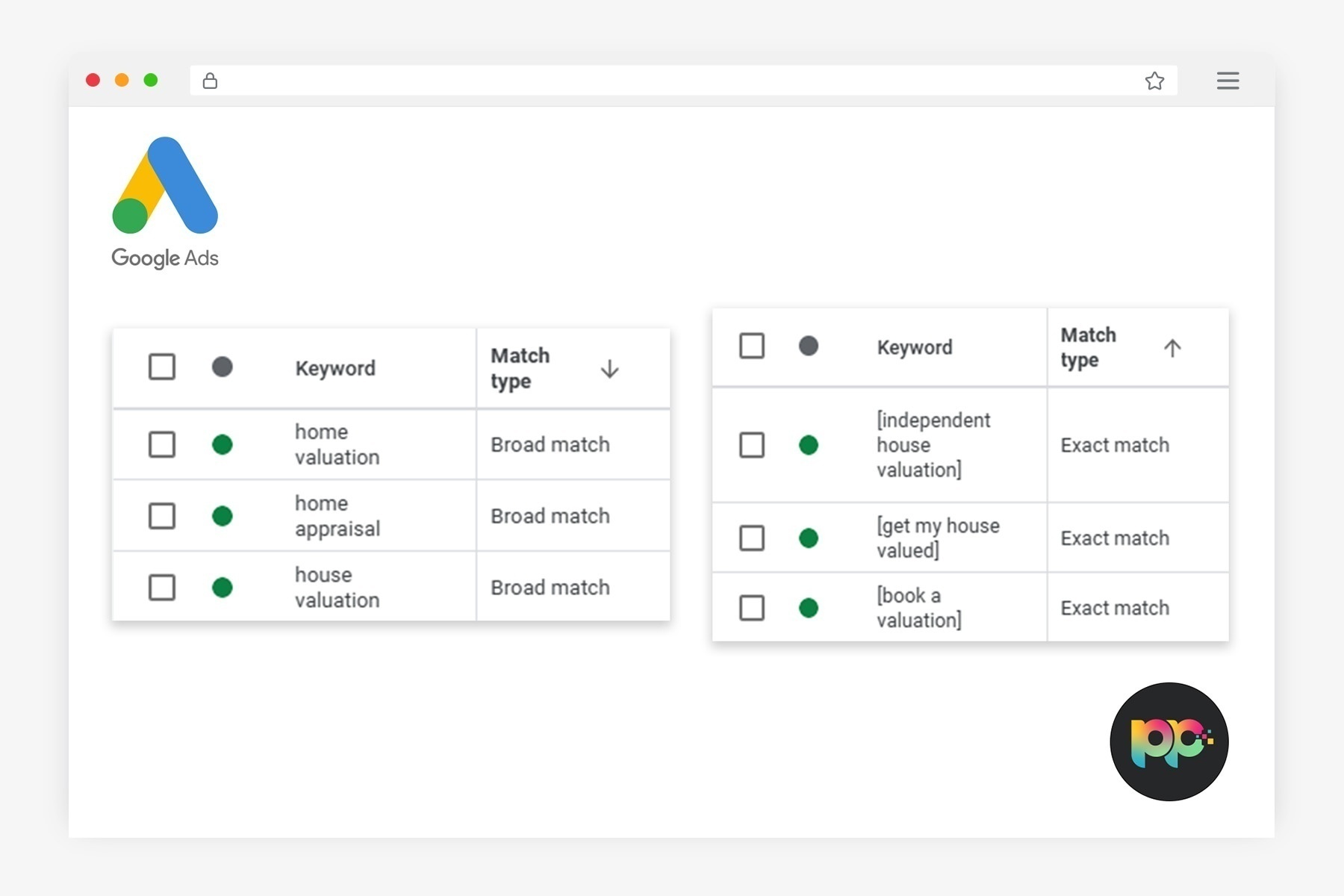
| Match Type | Control Level | Best Used For | Risk Factor |
|---|---|---|---|
| Broad Match | Lowest | Discovery and reach | Irrelevant traffic |
| Phrase Match | Medium | Targeted expansion | Over-restriction |
| Exact Match | Highest | Known converters | Missed opportunities |
Which keywords are actually worth what you’re paying? Your click-through rates tell you if people care about your message. Conversion rates show whether you’re attracting the right crowd. And when cost per click starts creeping up (or diving down), that’s usually Quality Score shifts or competitors making moves.
Your business adds new services but somehow your keyword lists stay frozen in time. Search term reports show you exactly what people are searching for that you’re completely missing. Those seasonal terms you set up last year? They’re sitting there doing nothing whilst real opportunities slip past.
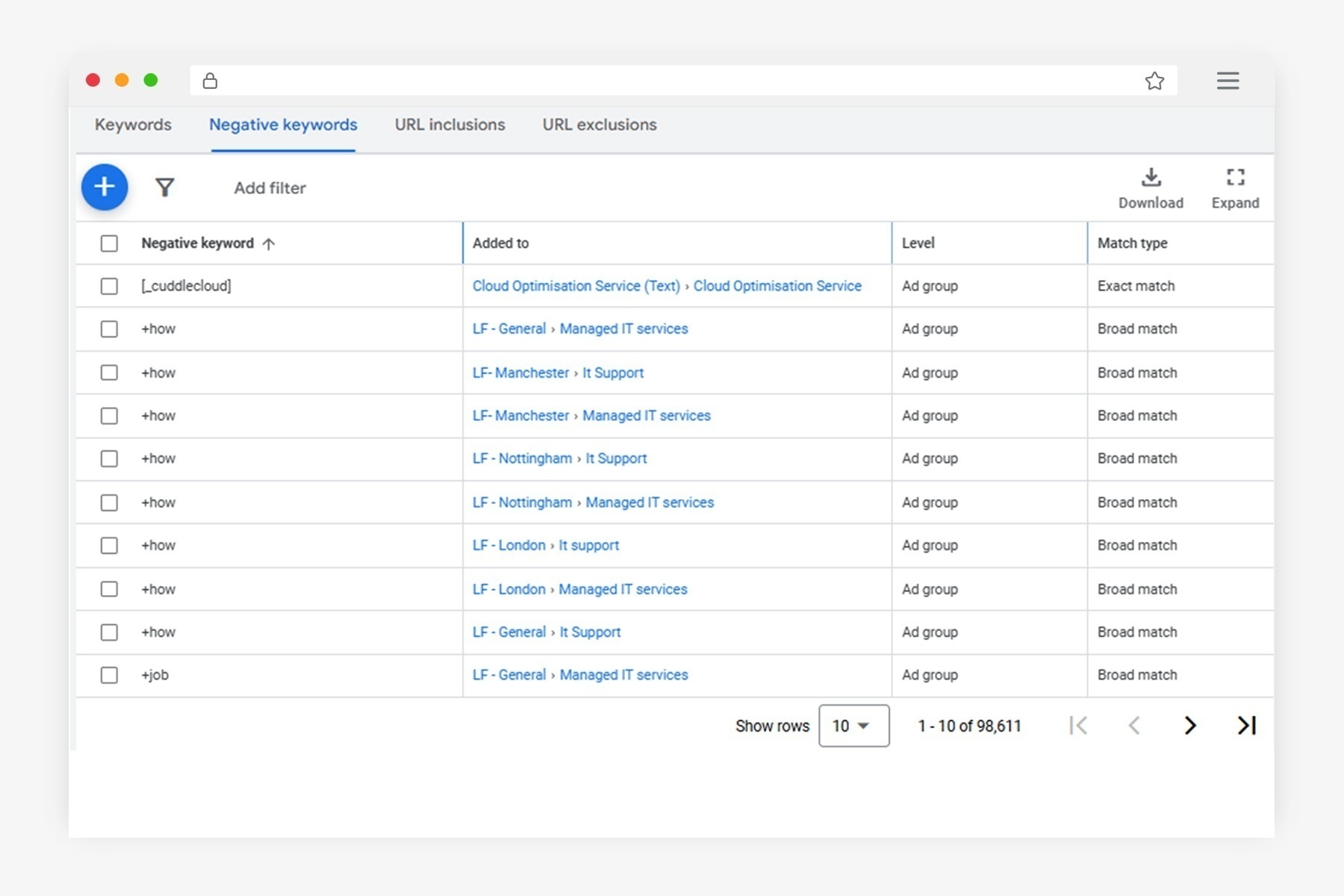
Why throw money at irrelevant clicks when you could just block them? Search term reports are packed with words you definitely don’t want triggering your ads and building solid negative keyword lists stops the waste before it happens.
Ad Copy Performance Review
Click or scroll past? That decision happens in about two seconds and it’s your ad copy doing the heavy lifting. Generic messaging that could apply to anyone usually applies to no one.
Forget clever wordplay. Your headlines need to match what people actually typed into Google and they need to show why you’re different from the five other ads on the same page. When your search terms don’t align with your ad copy and your ad copy doesn’t match your landing page, your Quality Scores suffer and your costs go through the roof.
Split testing isn’t some nice-to-have feature you can skip. Accounts that stick with one ad per ad group are basically throwing money away and the patterns you uncover from proper testing tell you things about your audience that pure intuition never will. What messaging tone actually clicks with people? Which calls-to-action make people click instead of scroll past?
“Learn More” hits different than “Get Quote” depending on who’s seeing your ad.
Bidding Strategy Analysis
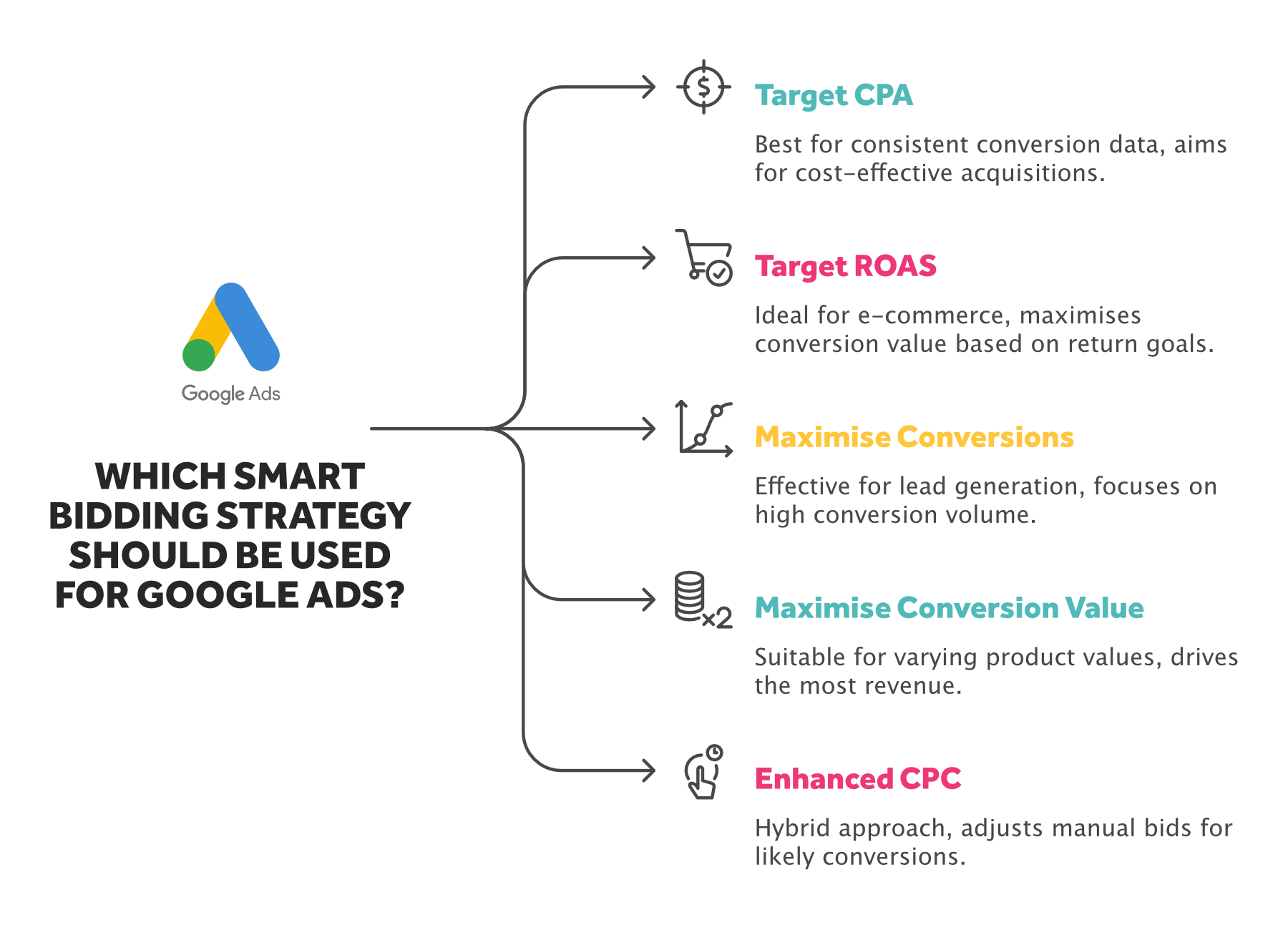
Whether you go manual or automated with bidding comes down to how much data you’ve got flowing through the account. Fresh campaigns need you watching the controls until there’s enough conversion history to work with, but once you’ve got volume and Smart Bidding configured properly, automation often outperforms manual adjustments.
Smart Bidding strategies each serve different business objectives:
- Target CPA focuses on lead volume at specified costs
- Target ROAS optimises for revenue return
- Maximise Conversions drives volume within budget constraints
- Maximise Conversion Value prioritises revenue over quantity
Target CPA won’t work without solid conversion tracking, whilst Target ROAS demands proper transaction values. When your bidding strategy doesn’t match what data you’ve actually got available, performance starts sliding downhill fast.
Starve an automated bidding strategy of budget and it can’t learn properly. Historical bid adjustments you made months ago? They’re probably fighting against your current automated setup right now.
Conversion Tracking Validation

Get your tracking wrong and every decision after that becomes guesswork.
But tag implementation gets messy quickly (duplicate events firing, attribution windows set incorrectly, missing conversion points). Phone tracking, form submissions and CRM data imports all bring their own headaches to sort through.
Data discrepancies between Google Ads and your analytics platforms? That’s usually tracking gone wrong, which means you’re making decisions based on unreliable numbers. Website integrations need checking regularly because when the data doesn’t match up, neither will your ROI.
Landing Page Alignment
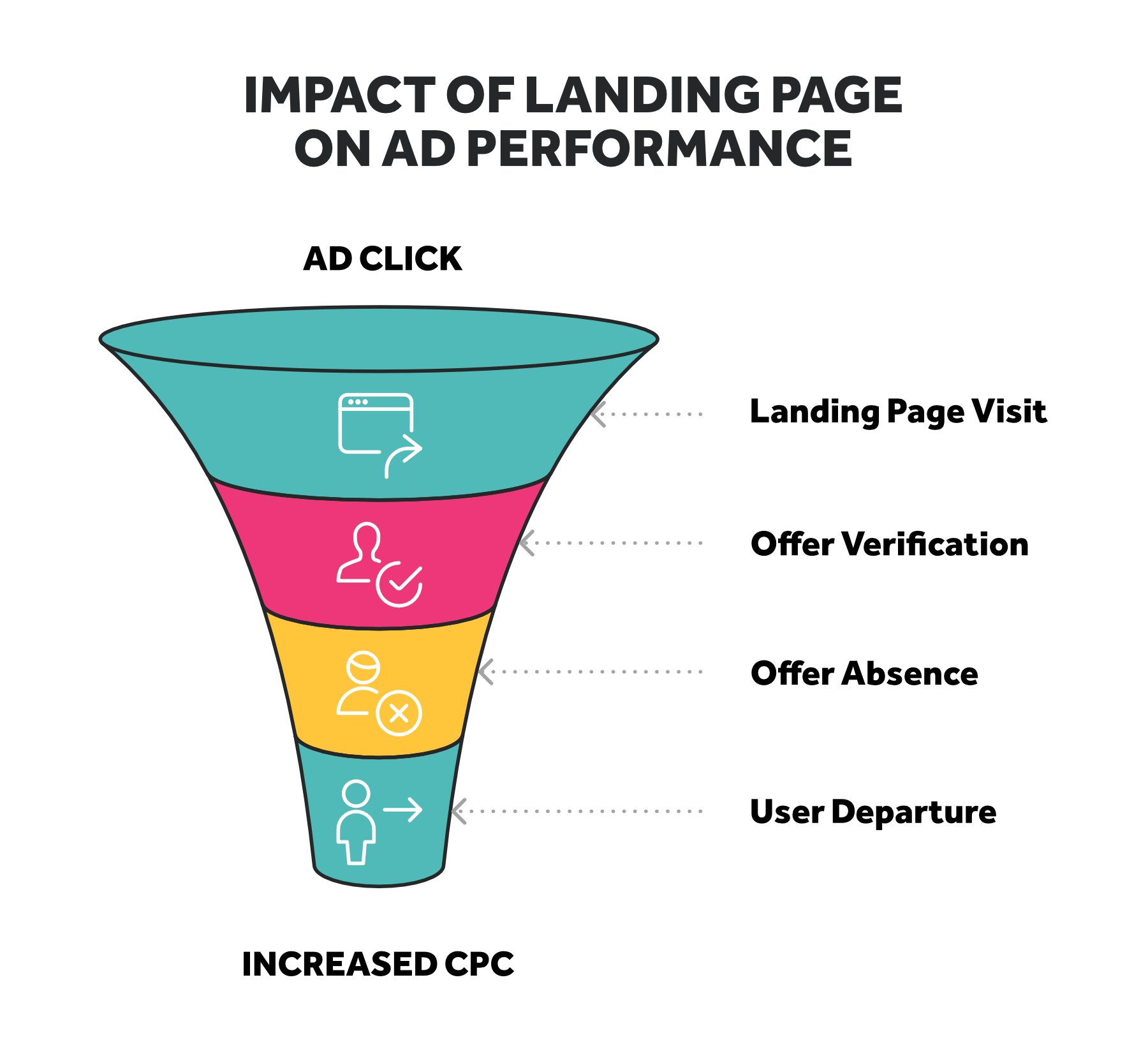
Someone clicks your ad because they want something specific, but then they land on your page and it’s talking about something completely different. Message continuity matters more than most people realise.
Promise a 20% discount in your ad copy but don’t actually have one running on your site? Users will bounce faster than you can say “Quality Score drop”. Offer verification isn’t just about honesty (though that helps). It’s about keeping people on your pages long enough to convert.
Google factors page performance into Quality Score calculations, so a slow-loading mobile site doesn’t just annoy users. It pushes up your advertising costs too, whilst unclear calls-to-action leave people wondering what they’re supposed to do next.
When someone clicks your ad about a free consultation, they shouldn’t land on a page that makes them hunt for the booking form. Your landing pages work best when they pick up exactly where the ad left off, making that next step blindingly obvious rather than burying it under chunks of boring company waffle.
Performance Data Interpretation
Looking at click-through rates alone? You’re missing half the story. Combine those numbers with cost-per-click shifts and Quality Score changes and suddenly you’ve got a proper picture of what’s actually happening in your account.
Here’s where most people trip up with ROAS calculations. They focus on revenue when they should be looking at profit margins (because what’s the point of £10,000 in sales if you only made £500?). And those CPA targets you set six months ago probably need updating since your business costs have changed.
Algorithm updates happen. Competitors launch new campaigns. Christmas shopping kicks in. Separating what you can control from what you can’t makes the difference between smart optimisation and chasing your tail.
Post-Audit Action Planning

Getting your hands on audit insights is just the beginning. We sort findings into quick wins and strategic projects so you’re not drowning in recommendations whilst the account bleeds money.
Some fixes happen fast, others take months of planning. Broken conversion tracking? That’s sorted within hours and starts paying dividends immediately.
But restructuring entire campaigns or realigning bidding strategies? Those need your marketing team talking to developers, budgets getting shifted around and stakeholders actually agreeing on something for once.
Try fixing everything at once and you’ll end up fixing nothing properly. Start with the changes that pack the biggest punch for minimal effort, then tackle the strategic stuff when you’ve got breathing room.
Google’s platform won’t sit still whilst you’re not watching. New features drop, algorithms shift and competitors start copying your best moves, which means regular monitoring stops small issues becoming massive headaches down the line.
Think of quarterly audits as MOTs for your advertising spend. Your business changes, markets shift and that expensive Google Ads machinery needs proper tuning to keep delivering results rather than burning through budget.
FAQs
How often should I have a Google Ads audit conducted?
Quarterly audits work best for most accounts as they provide regular oversight without being too frequent. However, you should consider an immediate audit if you’re experiencing performance plateaus, planning budget increases, switching agencies or if you can’t clearly explain where your advertising spend is going and what results it’s delivering.
What's the difference between an internal review and a third-party Google Ads audit?
Third-party auditors bring valuable detachment that internal teams often lack when reviewing campaigns. When you manage campaigns daily, you develop assumptions about what works that can create blind spots. Fresh external eyes question these assumptions and often discover opportunities that have been hiding in plain sight due to familiarity bias.
Will a Google Ads audit disrupt my current campaigns?
A proper audit is purely analytical and won’t disrupt your running campaigns. Auditors review your account structure, performance data, settings and tracking without making changes during the assessment phase. Any recommendations for improvements are presented separately, allowing you to decide which changes to implement and when to make them.

Co-Founder & PPC Specialist at Priority Pixels
Nathan Yendle is Co-Founder of Priority Pixels and a Google Partner specialising in PPC strategy and campaign optimisation. With years of experience managing high-performance Google Ads accounts, Nathan focuses on data-driven decisions that deliver measurable results for B2B businesses and public sector organisations. His expertise spans paid search, display, and remarketing, helping clients maximise ROI through strategic planning and continuous improvement.


 Paul Clapp | 16/02/2026