Paid Media Strategy for SaaS: Balancing Brand Awareness and Direct Response

SaaS companies face a tension in their paid media strategy that most other businesses don’t encounter to the same degree. Direct response campaigns, the ones targeting people actively searching for a product to buy, deliver measurable results quickly. Brand awareness campaigns, the ones that put your name in front of people before they’re ready to buy, take longer to produce results but shape the entire demand pipeline. Most SaaS companies lean too heavily toward one side or the other. The ones that grow sustainably find the right balance between them. Priority Pixels provides paid media and digital marketing for technology companies where brand and performance campaigns are planned as a single strategy rather than treated as competing priorities.
Getting this balance wrong is expensive. A SaaS company that invests only in bottom-of-funnel direct response will eventually exhaust the available demand for its category. A company that invests only in brand will build awareness without converting it into pipeline. The paid media strategy that works is the one that creates demand through brand activity while capturing it through direct response, with each side feeding the other.
Why Brand and Direct Response Need Each Other
Direct response campaigns capture existing demand. Someone searches for “project management software” or “CRM for small teams”, sees your ad and clicks through. The intent is already there. Your job is to be visible and relevant when they search. This works well until you’ve reached everyone who’s actively searching for your category, at which point the campaigns plateau and CPCs rise as you compete harder for a fixed pool of queries.
Brand campaigns create future demand. They put your company in front of people who will need your product at some point but aren’t searching for it today. When those people eventually do search, they’re more likely to click your ad (because they recognise your name), more likely to trust your product (because they’ve seen your content before) and more likely to convert (because they’ve already formed a positive impression). The work that brand campaigns do is invisible in direct response reporting, but it directly affects the performance of every campaign further down the funnel.
The SaaS companies that scale their paid media most effectively are the ones that understand brand and direct response as different stages of the same customer journey rather than as separate budget categories competing for the same pot of money.
Research from Search Engine Land and other industry sources has repeatedly shown that branded search volumes increase when companies invest in upper-funnel activity. People who see your display ads, LinkedIn content or video campaigns on Tuesday are more likely to search for your company name on Thursday. That branded search traffic converts at a higher rate and lower cost than generic keyword traffic. The brand investment shows up in the performance data. It just shows up in a different campaign.
The Problem With Pure Direct Response
SaaS companies that run only direct response campaigns, typically Google Ads targeting category keywords, hit a ceiling fairly quickly. The number of people actively searching for your product category at any given time is finite. Once you’ve captured the most relevant searches, growth comes from either broadening your keywords (which brings in lower-intent traffic) or increasing bids (which raises your CPA without improving volume).
There’s a second problem that’s harder to see. When you only invest in direct response, you’re competing for prospects who are evaluating multiple options simultaneously. They clicked your ad and two competitors’ ads. They have no prior impression of your company. The playing field is level. The winner is often the company with the strongest landing page or the best pricing rather than the strongest product. Brand investment tips that playing field before the prospect ever searches.
A prospect who has seen your CEO’s LinkedIn posts, watched a product walkthrough video and read a case study from a company in their industry is not comparing you on equal terms with a competitor they’ve never heard of. They arrive at your landing page with existing trust. That trust reduces the friction in the sales process and increases the likelihood of conversion. PPC campaign management that only targets bottom-of-funnel keywords misses this effect entirely.
Allocating Budget Between Brand and Performance
There’s no universal split that works for every SaaS company. The right allocation depends on how well known your brand already is, how competitive your category is, how long your sales cycle runs and whether you’re optimising for short-term pipeline or long-term market position.
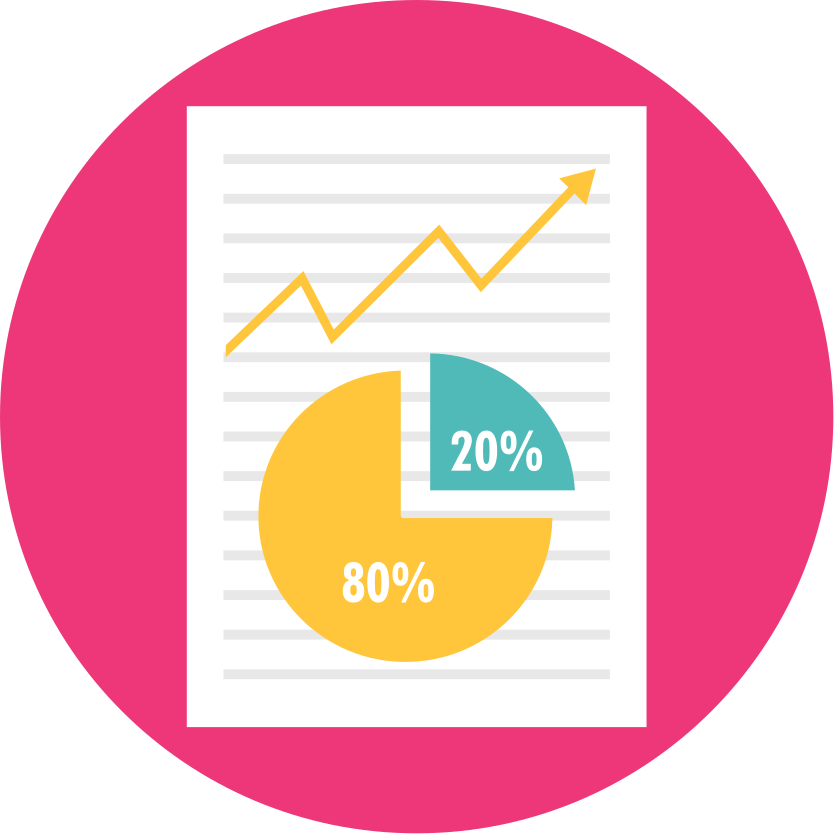
Early-stage SaaS companies with limited brand recognition often need to invest a larger proportion in brand activity because there’s no existing awareness to capitalise on. A company nobody has heard of will get low click-through rates on generic keyword campaigns because searchers default to the names they recognise. Building some baseline awareness first makes every subsequent direct response campaign more effective.
| Company Stage | Typical Brand Allocation | Typical Performance Allocation | Rationale |
|---|---|---|---|
| Pre-product-market fit | 20-30% | 70-80% | Focus on validating demand with direct response, light brand |
| Growth stage (established product) | 30-40% | 60-70% | Begin investing in demand creation to fuel future pipeline |
| Scaling (market leader) | 40-50% | 50-60% | Sustained brand investment protects market position |
| Mature (category dominant) | 50%+ | 50% or less | Brand defence and category ownership become the priority |
These allocations are starting points rather than rules. The right split for your business depends on what the data tells you about how brand and performance interact in your specific market. Some SaaS categories are so competitive that even growth-stage companies need to invest heavily in brand to differentiate. Others have enough unmet search demand that direct response can sustain growth for years without significant brand spending.
Which Channels Serve Which Purpose
Different advertising channels suit different strategic purposes. Google Search Ads capture intent. People are already looking for something. Your ad appears when their search matches your keywords. This is a direct response channel. LinkedIn sponsored content reaches specific professional audiences with targeted messaging. It can serve both brand and performance depending on the campaign objective and creative. YouTube and display campaigns are primarily brand channels that build awareness and keep your company visible between active search moments.
Social media advertising on LinkedIn is particularly effective for SaaS brand campaigns because the targeting ensures your content reaches the right professional audiences. A thought leadership post promoted to CTO-level professionals in your target industry costs money, but it’s reaching people who may become prospects six months from now. That’s the time horizon brand campaigns work on.
Google Ads should form the backbone of direct response for most SaaS companies. Search campaigns targeting high-intent keywords, remarketing campaigns re-engaging website visitors and Performance Max campaigns reaching audiences across Google’s network cover the demand capture side of the strategy. The brand and demand creation work that happens on LinkedIn and YouTube fills the top of the funnel that Google campaigns draw from.
Measuring Brand Activity Without Vanity Metrics
The biggest objection SaaS companies have to brand investment is measurement. Direct response campaigns produce clear metrics: cost per click, cost per lead, cost per acquisition. Brand campaigns produce impressions, reach and video views. Those metrics feel softer. They don’t connect directly to pipeline in the same way.
That doesn’t mean brand activity is unmeasurable. It means you need to look at different indicators. Branded search volume (how many people search for your company name) is one of the strongest signals that brand investment is working. Track it monthly. If your brand campaigns are effective, branded searches should increase over time. Those searches should convert at a higher rate and lower cost than generic keyword traffic.
- Branded search volume trends as a percentage of total search traffic
- Direct and organic traffic growth to your website from non-paid sources
- Click-through rates on generic keyword campaigns, which tend to improve when brand awareness increases
- Time to close for deals that originated from branded vs non-branded search
- Pipeline velocity, measuring how quickly prospects move through the sales process
The HubSpot State of Marketing report has shown that B2B companies investing in brand consistently see improvements in these downstream metrics even when the brand campaigns themselves don’t generate direct conversions. The challenge is patience. Brand effects compound over months, not days. SaaS companies used to measuring everything in weekly sprints find this timeframe uncomfortable.
When to Shift the Balance

The balance between brand and direct response isn’t static. It should shift based on business conditions, competitive pressures and what the data tells you about channel performance. The SEMrush marketing blog has published extensive analysis on how B2B companies adjust paid media allocation across growth stages. The pattern is consistent: the most successful companies review their brand-to-performance ratio quarterly rather than setting it once and leaving it alone.
Increase brand allocation when your direct response campaigns are hitting diminishing returns, when CPCs are rising without corresponding improvements in conversion rate, when competitors are gaining mindshare in your category or when your sales team reports that prospects increasingly arrive with no prior awareness of your company. These are all signals that the demand pool you’re fishing from is getting smaller or more competitive and that upstream investment is needed to replenish it.
Increase direct response allocation when there’s untapped search demand in your category, when you’ve recently launched a new feature or product that addresses a searchable need, when your conversion rates from search are strong and you simply need more volume or when short-term pipeline targets require immediate results. The flexibility to shift budget between brand and performance based on what the business needs right now is what separates a strategy from a set-and-forget campaign structure.
The approach from WordStream’s analysis of B2B advertising performance supports this. The SaaS companies with the strongest long-term paid media results are the ones that treat brand and direct response as complementary investments and adjust the allocation quarterly based on performance data rather than locking in a fixed split at the start of the year.
FAQs
What is the difference between brand and direct response in SaaS paid media?
Direct response campaigns target people actively searching for your product category, aiming for immediate conversions like demo requests or trial sign-ups. Brand campaigns put your company in front of future buyers who are not yet searching, building recognition and trust that makes direct response campaigns more effective when those people do start evaluating options.
How much should a SaaS company spend on brand vs performance?
The split depends on company stage and market conditions. Early-stage companies typically allocate 20-30% to brand and 70-80% to performance. Growth-stage companies often shift to 30-40% brand. Market leaders may invest 40-50% or more in brand to defend their position. Review the allocation quarterly based on performance data.
How do you measure brand campaign effectiveness for SaaS?
Track branded search volume trends, direct traffic growth, click-through rate improvements on generic keyword campaigns, time to close on branded vs non-branded leads and pipeline velocity. These downstream metrics indicate whether brand investment is creating the awareness and trust that improve conversion rates across all channels.
Which advertising channels work for SaaS brand campaigns?
LinkedIn sponsored content is particularly effective because of its professional audience targeting. YouTube video campaigns build awareness through product demonstrations and thought leadership content. Display campaigns maintain visibility between active search moments. These channels create the awareness that makes Google Search campaigns more effective at capturing demand.
When should a SaaS company increase brand spending?
Increase brand allocation when direct response campaigns show diminishing returns, CPCs are rising without better conversion rates, competitors are gaining mindshare in your category or when your sales team reports that prospects arrive without prior knowledge of your company. These signals indicate the available demand pool needs replenishing through upstream investment.

Co-Founder & PPC Specialist at Priority Pixels
Nathan Yendle is Co-Founder of Priority Pixels and a Google Partner specialising in PPC strategy and campaign optimisation. With years of experience managing high-performance Google Ads accounts, Nathan focuses on data-driven decisions that deliver measurable results for B2B businesses and public sector organisations. His expertise spans paid search, display, and remarketing, helping clients maximise ROI through strategic planning and continuous improvement.

 Paul Clapp | 25/02/2026