Microsoft Ads vs Google Ads: Which Platform Delivers Better Results for B2B?
Don’t think of Microsoft Ads and Google Ads as competitors you need to pick between. Google has the volume, but Microsoft serves professionally focused audiences at costs that will please your finance team. A well-managed PPC strategy uses both.
Google captures those high-intent searches when people are actively seeking solutions. Meanwhile, Microsoft reaches decision-makers at their desks during office hours, usually for about half what you would pay Google. Smart B2B teams run the platforms strategically together as part of a broader paid media strategy.
Platform Reach and Audience Differences
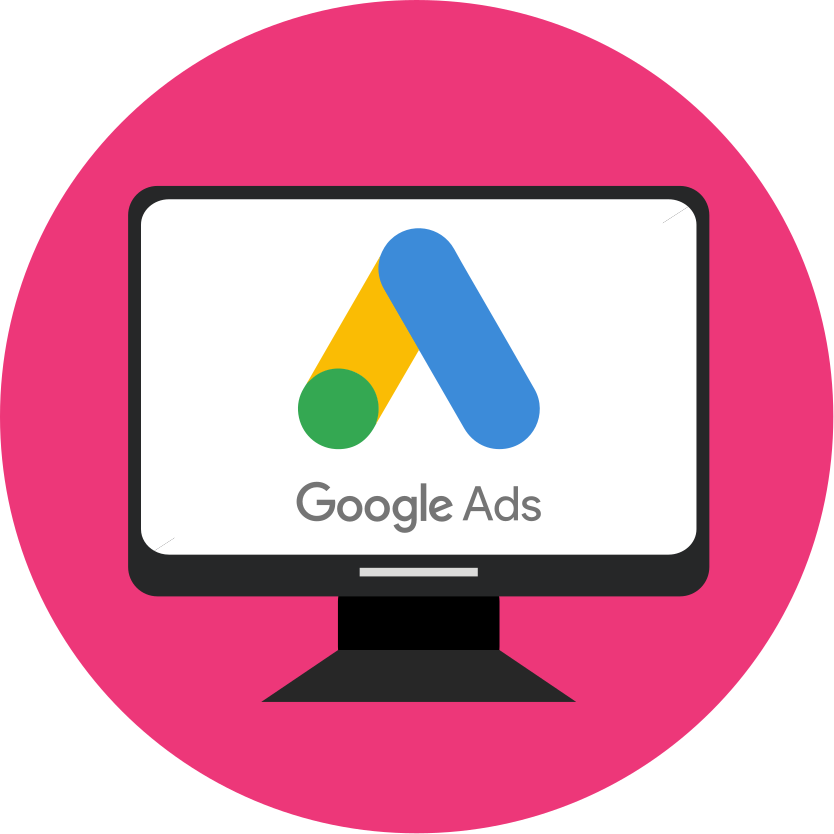
Numbers don’t tell the whole story, though Google’s around 90% of global search traffic is hard to ignore. That 5-10% UK slice Microsoft owns represents professionals searching from work laptops between 9 and 5, which matters more than raw volume if you’re selling to businesses.
Search Market Share and User Intent
Every search under the sun happens on Google. Students researching essays, families planning weekend breaks and CEOs researching new software solutions all mixed together in one massive pool.
Microsoft’s audience mostly finds themselves on Microsoft Edge because that’s what their company IT department decided everyone should use. Working hours, company laptops and they’re looking for something specific.
Microsoft Ads users tend to be older, earn higher incomes and hold professional roles. They’re not choosing Bing over Google deliberately. They’re using it because it’s there. But that context matters enormously for B2B targeting.
These are senior professionals and decision-makers who work in industries where someone else picks their browser and they can’t just download Chrome whenever they want it. The conversion behaviour differs completely from people scrolling Google on their personal devices at home.
Volume versus quality tells different stories. Google Ads gives you the numbers for big awareness pushes and lead generation at scale, but Microsoft connects you with commercially minded users that most brands ignore while chasing Google’s massive reach.
Usage Patterns Across Devices
Microsoft’s traffic patterns are predominantly desktop-based. Peak usage hits during standard office hours when people are sitting at their desks researching business solutions they need to buy. This makes perfect sense for B2B sales cycles where one person rarely makes the final call and everyone wants to evaluate options properly first.
Google’s reach spans desktop and mobile users. Searches happen at all hours when people are browsing casually or doing quick research. You’re catching users who want fast answers and rough comparisons, not always detailed B2B evaluations.
Selling enterprise software that needs proper technical review and budget sign-off? Microsoft’s desktop traffic might convert better even with smaller volumes. Running brand awareness campaigns where reach matters more than immediate conversions? Google’s broader audience fits that brief perfectly.
Browser and Ecosystem Influence
Microsoft gets interesting because users on Bing are typically logged into work accounts, searching from company devices whilst sitting in Office 365 environments. Everything screams professional intent before they even type a query.
Google blends everything together. Someone searches for project management tools right after checking restaurant reviews, all in the same Chrome session. Google’s algorithms try to separate personal from professional context, but they’re fighting against a platform that mixes worlds constantly.
Beyond search, there’s a bigger picture about user behaviour. Microsoft users don’t just click and bounce. They’ll fill out those detailed enquiry forms you’ve been optimising, download your technical whitepapers and spend proper time browsing through your site with genuine commercial intent.
Targeting Options and B2B Alignment

Getting B2B targeting wrong turns campaigns into expensive guesswork.
Job Title and Company-Based Targeting
Microsoft pulls ahead with their LinkedIn integration, which gives you targeting options that Google can’t touch. Through the Microsoft Audience Network, you’re working with verified professional data rather than educated guesses about what someone might do for work.
This means verified LinkedIn profile information, not behavioural inference. Want to reach procurement managers at manufacturing companies with 500-1000 employees? Done. Marketing directors at UK SaaS firms? Easy. Google makes you cobble together keywords and demographics and hope for the best, but this gives you surgical precision on professional criteria.
Google has custom audiences and affinity segments that tap into browsing patterns and account data. But it’s all educated guesswork about professional status. You’re targeting people who “seem interested in business software” when what you really need is reaching real CTOs and procurement managers.
Microsoft’s LinkedIn integration applies primarily to display campaigns rather than search ads. But this still enables powerful account-based marketing strategies that aren’t possible on Google.
This becomes interesting for B2B advertisers. Microsoft lets you build brand awareness with your dream accounts months before they start Googling for solutions, then hit them again when they’re actively searching.
Account-Based Marketing Opportunities
Enterprise B2B teams focus heavily on account-based marketing these days, especially when you’re chasing six-figure deals with a shortlist of maybe 200 companies. Microsoft Ads supports this properly through company targeting and professional demographics that Google simply can’t match.
Got fifty dream accounts your sales team wants to crack? Microsoft can make sure your brand shows up specifically to decision-makers at those companies. When deals drag on for months and you need multiple stakeholders seeing your name, that precision targeting becomes valuable.
Customer match lists and custom intent audiences work well enough on Google, but you’re still playing the matching game against their user database. That LinkedIn integration Microsoft has cuts straight to company-level targeting without the guesswork.
Search Intent and Keyword Matching
For capturing search intent, Google knows what it’s doing. Exact match, phrase match, broad match, the whole toolkit works because they’ve got the search query data to back it up.
Microsoft uses the same keyword matching logic, which means your Google Ads campaigns import with barely any tweaks needed. B2B keywords often perform surprisingly well there, especially commercial and professional terms where Microsoft’s audience just fits better.
Volume creates challenges though. Those long-tail B2B keywords you’re tracking might get five searches a month on Microsoft, so forget about gathering meaningful data or hitting any real scale.
| Targeting Method | Google Ads | Microsoft Ads |
|---|---|---|
| Job Title Targeting | Inferred from behaviour | Direct from LinkedIn data |
| Company Targeting | Customer match lists only | Direct company name targeting |
| Search Volume | High for most keywords | Lower but often less competitive |
| Professional Context | Mixed personal/professional | Primarily professional usage |
Cost and Performance Metrics
Microsoft beats Google on cost-per-click most of the time. But what matters is whether that cheaper traffic turns into customers who buy from you.
Cost-per-Click Comparison
Microsoft’s CPCs run 30-40% lower than Google’s across the board, which sounds brilliant until you dig into what that means for your bottom line. Industry benchmarks for 2025 put average Microsoft costs at £1.20-1.50 for B2B keywords, whilst Google hammers you with £2.00-2.50 or worse.
Legal services, financial advice, enterprise software see even bigger gaps. Google will charge you £8-10 per click without hesitation, but Microsoft keeps things reasonable at £3-5 for the exact same search terms.
The difference comes from fewer advertisers fighting over the same keywords, so auction prices stay reasonable and your budget doesn’t evaporate before you’ve learned anything useful about what works.
A £2 click that generates a qualified lead beats a £1 click that bounces every single time. Which platform offers lower CPCs is the wrong question. What you want to know is which one delivers better return when you track everything through to closed revenue.
Conversion Rates and Lead Quality
Conversion rates on Microsoft frequently match or exceed Google’s performance in B2B campaigns. Microsoft’s professional user base engages more deliberately with business content than the broader Google audience.
Google wins on volume. Microsoft wins on qualification. Your sales capacity, average deal value and cost-per-acquisition targets determine which matters more for your specific situation.
Stop measuring success at form submissions. Many B2B conversions kick off months-long sales processes, so the most accurate performance picture comes from tracking platforms through to closed revenue. Connect ad spend to sales outcomes and you’ll understand true customer acquisition costs.
Return on Ad Spend
B2B companies tracking deals to completion consistently see something interesting with Microsoft. The lower cost per click doesn’t just save money upfront, it reduces total customer acquisition costs when the lead quality stays roughly the same. Mid-market B2B advertisers consistently report better ROAS because they’re spending less to get similar results.
Google’s still the heavyweight for capturing high-intent searches at massive scale. Microsoft often gives you better bang for your buck if you’re happy accepting smaller traffic volumes. Lower spend, tighter audience alignment, better efficiency makes up the Microsoft equation.
Strategic Recommendations for B2B Marketers
Smart B2B advertising strategies use platforms together, each handling different parts of their broader digital marketing strategies.
Forget the platform wars and think orchestration instead. Google gives you reach and scale to capture intent across the widest possible audience, while Microsoft delivers targeting precision and cost efficiency that stretches your budget further whilst reaching professionally focused users.
Platform-Specific Campaign Approaches
Don’t just copy-paste your Google campaigns into Microsoft and call it a day. Each platform works differently, so treating them as identical twins wastes money and misses opportunities.
Google is where you chase volume and test new approaches. Performance Max campaigns let you spread across search, display, YouTube and shopping networks whilst the massive traffic volumes mean you can run experiments that would take months to validate elsewhere.
Microsoft is the precision play. Those LinkedIn targeting options are perfect for reaching specific professionals who fit your buyer personas. Bid on identical keywords to Google but expect cheaper clicks and traffic that peaks during business hours on desktop.
Treat the platforms as complementary tools with distinct roles rather than interchangeable alternatives. This approach produces better results across your total paid search investment.
Account-Based Marketing Integration
Got a list of dream clients your sales team wants to crack? Microsoft should be doing the heavy lifting since you can literally target by company name and job title.
Building awareness before prospects even know they’re shopping? That’s where the Microsoft Audience Network comes in handy for display campaigns targeting decision-makers at your key accounts. When they finally do start their research, your brand’s already sitting in their head.
Time your campaigns to match what your sales team’s doing and prospects will see your brand everywhere during those important consideration weeks. Enterprise deals drag on forever with committees making decisions, which makes this multi-channel approach extremely valuable.
Testing and Budget Allocation
Why spend heavily testing unproven ideas on Google’s expensive platform when Microsoft’s cheaper environment lets you experiment freely? Test your new headlines there first. Try different core offers. See which calls-to-action work by watching conversion rates and form completions.
Found something that converts well? Now you can confidently scale those winning concepts to Google where the audience is massive but every click costs more.
Don’t just split your budget 50/50 because that feels fair. Base your allocation on what you’re trying to achieve and which platform delivers better results. Google wins when you need massive reach and volume. Microsoft typically gives you better efficiency and hits professional audiences harder. Check performance monthly and shift spend based on real data, not assumptions.
Most campaigns fall apart because you need platforms talking to your CRM so you can track leads from first click through to revenue. Only then do you see which channel drives pipeline growth versus which one just looks good in vanity reports.
Forget the tired advice about Google having bigger market share so it must be better. B2B success comes down to matching each platform’s strengths with what you’re trying to accomplish. Each has their place, but using them strategically beats following conventional wisdom every time.
FAQs
Which platform offers better value for money for B2B advertising?
Microsoft Ads typically delivers better cost-effectiveness for B2B campaigns, often charging about half what you’d pay on Google Ads for similar targeting. While Google offers greater volume, Microsoft’s professionally focused audience during business hours often provides better conversion rates for B2B services, making your budget work harder despite the smaller reach.
Can I target specific job titles and companies more effectively on Microsoft Ads?
Yes, Microsoft Ads offers superior B2B targeting through its LinkedIn integration, allowing you to target verified professional data like specific job titles, company sizes and industries. This gives you surgical precision compared to Google Ads, which relies on behavioural inference and educated guesses about users’ professional status rather than actual verified workplace information.
Should I run campaigns on both Microsoft Ads and Google Ads simultaneously?
Running both platforms simultaneously often works best for B2B companies rather than choosing one over the other. Google captures high-intent searches when prospects are actively hunting for solutions, while Microsoft targets decision-makers during office hours at lower costs. This dual approach lets you build brand awareness on Microsoft whilst capturing active demand on Google.

Co-Founder & PPC Specialist at Priority Pixels
Nathan Yendle is Co-Founder of Priority Pixels and a Google Partner specialising in PPC strategy and campaign optimisation. With years of experience managing high-performance Google Ads accounts, Nathan focuses on data-driven decisions that deliver measurable results for B2B businesses and public sector organisations. His expertise spans paid search, display, and remarketing, helping clients maximise ROI through strategic planning and continuous improvement.


 Paul Clapp | 16/02/2026