
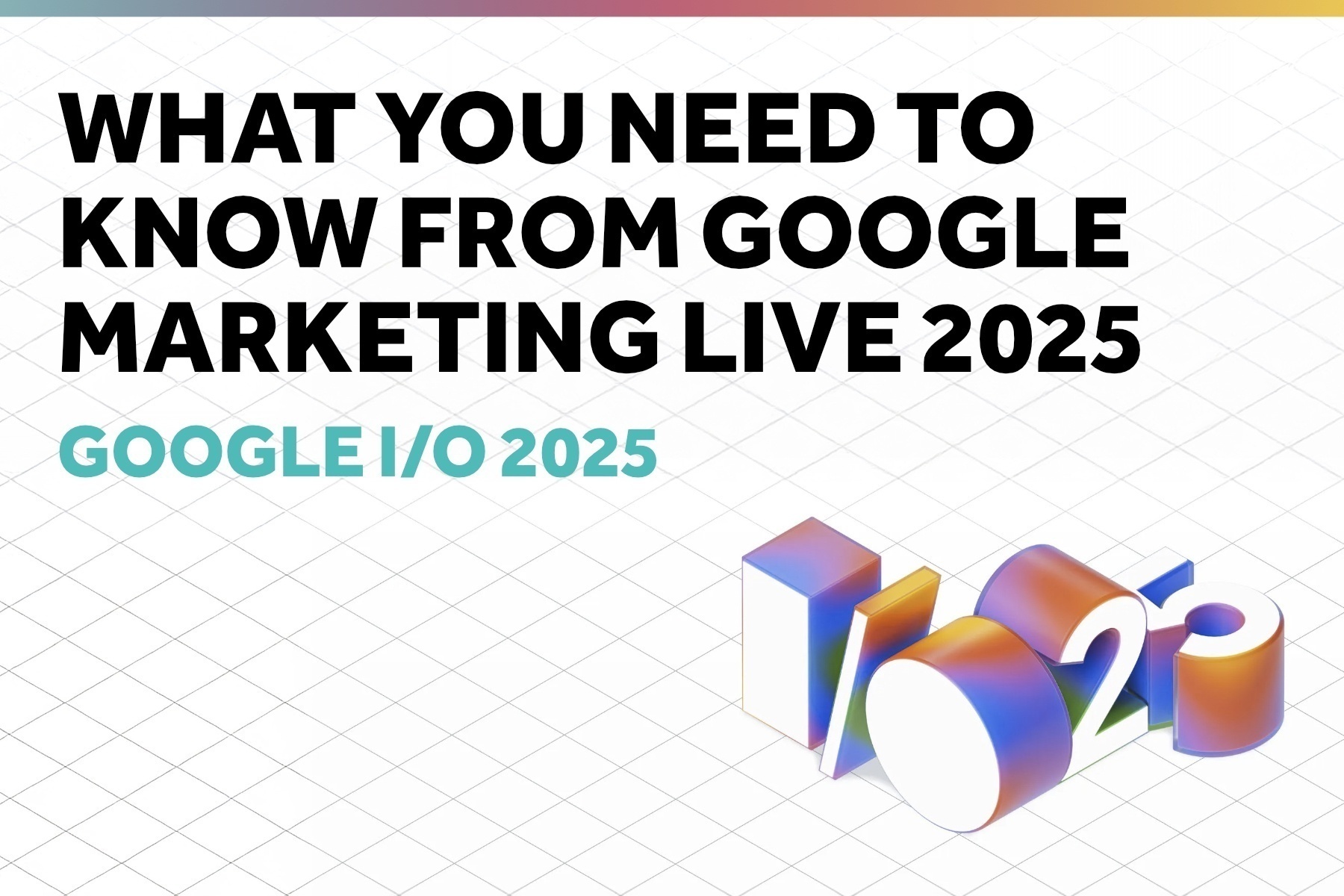
What You Need to Know from Google Marketing Live 2025
Google Marketing Live is Google’s annual showcase of new product developments and features across its advertising ecosystem. As expected, the focus this year was squarely on AI and all the ways Google integrates it to make creating, managing and optimising campaigns easier.
Below are the 10 announcements we believe are most relevant to businesses and organisations running campaigns through Google Ads.
1. The Power Pair Becomes the Power Pack
Google has expanded its foundational campaign structure. What was once the “Power Pair” of Search and Performance Max is now the Power Pack, combining AI Max for Search, Performance Max and Demand Gen into a more unified strategy.
Each supports different stages of the user journey: direct search intent, cross-channel reach and discovery-driven awareness. Together, they allow advertisers to cover the full funnel using data that flows between campaigns. This structure underpins much of what else is changing across Google Ads.
2. AI-Powered Search Campaigns (AI Essentials)
Google is rolling out an opt-in feature for Search campaigns that activates additional AI-driven tools to improve campaign performance. Known as AI Essentials, this includes support for auto-generated ad headlines, descriptions and improved keyword matching using broader signals.
Advertisers will still be able to review and edit creative assets, but the expectation is that campaigns will rely more heavily on Google’s understanding of intent than on manual targeting alone.
3. Ads Now Appear in AI Overviews
Ads are beginning to appear within AI Overviews, the summaries now featured in some Google Search results. These placements sit within AI-generated content rather than next to it, offering a new way to connect with users during exploratory searches.
These placements won’t behave like traditional text ads. They’re designed to feel relevant and helpful during broader search journeys. While still in early testing, this change signals a move towards ads that are more context-aware and less reliant on exact keyword matches. Businesses may start seeing impressions and traffic from entirely new kinds of search experiences.
4. Smart Bidding Becomes More Exploratory
Google’s bidding strategies have evolved again, this time with more emphasis on identifying emerging queries and trends. A new exploratory mode within Smart Bidding aims to find opportunities that may not fit existing targeting strategies. This could help advertisers tap into growing or underused areas of demand, particularly in sectors where search behaviour is constantly shifting.
5. Performance Max Gains Better Reporting
Performance Max campaigns now come with channel-level reporting, a long-requested improvement. Advertisers can finally see how much traffic and value is coming from Search, YouTube, Display, Shopping and other placements. This is a step towards better transparency and gives businesses clearer insight into how Performance Max is working. While campaigns will remain automated in structure, this change allows for more informed decisions about creative assets and audience strategies.
6. Video Ads Expand Across More Placements
Google continues to invest in video advertising, with several new placements and features announced. Shoppable YouTube Mastheads are now available on mobile, allowing users to browse products directly within the ad. Video units are also being introduced in Search results and interactive ad formats are expanding to Connected TV. With the rise of YouTube Shorts and more users engaging with video across devices, it’s clear that Google expects video to play a bigger role in awareness and conversion.
7. Generative AI for Creative Assets
Creative tools within Google Ads are evolving, with new AI-powered features that support image and video generation directly in the platform. Using technologies like Imagen 2 for visuals and Veo for video, advertisers can now develop supplementary creative assets based on website content or campaign goals. These tools are intended to speed up production workflows and help generate alternative versions for testing across formats.
8. First-Party Data and Privacy-Safe Measurement
As third-party cookies phase out, Google is pushing forward with tools that help advertisers make better use of their first-party data. New audience insights and measurement options are designed to work without relying on traditional tracking methods. This includes better modelling for conversions and support for privacy-focused setups like Enhanced Conversions and Consent Mode. For businesses, this means making sure tracking is configured properly and that data-sharing setups are accurate, secure and aligned with user preferences.
9. Accelerated Checkout and Virtual Try-On
Two new ecommerce features are designed to reduce friction in the customer journey. Accelerated Checkout allows users to move directly from an ad to a checkout-ready basket, while Virtual Try-On (VTO) helps shoppers preview apparel on real people through Search. Together, these features reflect Google’s ongoing effort to blend browsing and buying more seamlessly.
10. Conversational AI in Google Ads and Google Analytics
Google is introducing Conversational AI to Google Ads and Google Analytics. These new AI tools will allow advertisers to ask questions, get campaign recommendations and even set up basic ads using natural language. They’ll also learn from your performance data and generate reports, as well as proactively find and fix problems in your Google Ads account.
Ready to Make These Updates Work for You?
The changes announced at Google Marketing Live 2025 show just how quickly the platform is evolving. From smarter bidding and cross-channel reporting to AI-driven creative and new ad placements, there’s plenty to take advantage of. But it takes experience to know where to start and how to get results.
If you’re already running Google Ads or thinking about how these updates could fit into your marketing strategy, we can help. Our team stays on top of every platform change and works closely with clients to make sure their campaigns are running efficiently and effectively. Find out more about our Google Ads management services or get in touch to talk through how we can support your next campaign.

Co-Founder & PPC Specialist at Priority Pixels
Nathan Yendle is Co-Founder of Priority Pixels and a Google Partner specialising in PPC strategy and campaign optimisation. With years of experience managing high-performance Google Ads accounts, Nathan focuses on data-driven decisions that deliver measurable results for B2B businesses and public sector organisations. His expertise spans paid search, display, and remarketing, helping clients maximise ROI through strategic planning and continuous improvement.
 Paul Clapp | 16/03/2026
 Cara Vallance | 25/02/2026