


Google Ads for Construction Companies: Targeting the Right Projects

Winning commercial construction work through Google Ads requires a different mindset from most pay-per-click campaigns. The people clicking your ads are not consumers comparing quotes for a kitchen extension. They are procurement managers, quantity surveyors and project directors evaluating contractors for high-value contracts. That distinction changes everything about how campaigns should be structured. Working with a team that understands digital marketing for construction companies makes the difference between ad spend that generates real tender opportunities and budget that disappears into irrelevant clicks from homeowners looking for a local tradesperson.
The commercial construction sector has been slow to adopt paid search. Many firms still rely on frameworks, repeat clients and word of mouth to fill their order books. Those channels are valuable, but they leave businesses exposed when a key client reduces their programme or a framework agreement ends. Google Ads gives construction companies a way to reach new buyers at the exact moment those buyers are searching for a contractor. The intent behind a search like “commercial fit-out contractor London” or “industrial groundworks company Midlands” is strong. These are people with a live requirement and a shortlist to build.
Why Google Ads Works for High-Value Construction Services
The economics of Google Ads in construction are unusual compared to most industries. Cost per click for commercial construction terms can be high, often between several pounds and fifteen pounds depending on the keyword and location. But the contract values at stake make that cost almost insignificant. A single conversion from a paid search campaign that leads to a six-figure contract justifies months of ad spend. The maths works in a way it simply does not for businesses selling low-margin products or services.
What makes paid search particularly effective for construction is the quality of intent behind the searches. Someone typing “design and build contractor healthcare” into Google Ads is not casually browsing. They have a project. They need a contractor. They are evaluating options right now. That level of buyer intent is difficult to replicate through any other marketing channel. LinkedIn advertising can put your name in front of procurement professionals, but it interrupts them during their day. Google Ads catches them during the act of searching for exactly what you offer.
There is also a competitive advantage for early movers. Many construction companies have not yet invested in paid search, which means the auction for commercial construction keywords is less crowded than consumer markets. In sectors like legal services or SaaS, you might be competing against dozens of advertisers for each keyword. In commercial construction, the field is often much thinner. That translates to lower costs and higher visibility for the firms that are running campaigns effectively.
Choosing the Right Campaign Types
Google offers several campaign types, but not all of them suit construction companies equally well. Understanding where each type fits within your marketing strategy prevents wasted spend and focuses budget on the channels most likely to generate genuine enquiries from qualified prospects.
Google Ads management for construction should start with Search campaigns. These are the text ads that appear at the top of Google when someone types in a relevant query. For construction companies targeting commercial work, Search campaigns are the most direct path to reaching buyers with active requirements. You choose the keywords you want to appear for, write ads that speak to your capabilities and pay only when someone clicks through to your website.
| Campaign Type | How It Works | Best Use for Construction | Watch Out For |
|---|---|---|---|
| Search | Text ads triggered by keyword searches | Capturing procurement-level searches for specific services | Requires strong negative keyword lists to filter residential queries |
| Display | Visual banner ads across websites and apps | Retargeting visitors who viewed your service pages but did not enquire | Low conversion rate if used for cold prospecting |
| Performance Max | AI-driven ads across all Google channels | Broader reach when you have conversion data to train the algorithm | Limited control over placements and keyword targeting |
| Video | YouTube and partner site video ads | Project showcase and brand awareness for larger firms | Requires professional video content to be effective |
Display campaigns have a narrower use case for construction. Running display ads broadly across the Google Display Network tends to produce low-quality clicks from people with no interest in commercial building services. Where Display works well is remarketing. If someone visited your commercial fit-out page but did not submit an enquiry, a remarketing campaign can show them visual ads as they browse other websites over the following weeks. This keeps your business visible during what is often a long evaluation period in construction procurement.
Performance Max campaigns have gained traction across Google Ads, but construction companies should approach them cautiously. These campaigns use Google’s machine learning to place ads across Search, Display, YouTube and other channels automatically. They can work well once you have enough conversion data for the algorithm to learn from. But for a construction company just starting with paid search, the lack of control over where your ads appear and which searches trigger them can lead to budget being spent on irrelevant audiences. Start with Search, build up conversion data and then test Performance Max once you have a baseline to measure against.
Keyword Strategy for Commercial Construction

The keyword strategy for a construction company running Google Ads needs to be precise. The gap between commercial intent and residential intent is enormous. Getting it wrong means paying for clicks that will never become enquiries. A search for “building contractor” could come from a developer looking for a main contractor for a mixed-use scheme or from a homeowner wanting a loft conversion. Your keyword strategy needs to separate those two audiences effectively.
Start with service-specific terms combined with commercial qualifiers. Instead of bidding on “building contractor” alone, target phrases like “commercial building contractor”, “industrial fit-out company”, “office refurbishment contractor” and “design and build main contractor”. These longer phrases have lower search volumes, but the people using them are far more likely to be in your target market. The conversion rates on specific commercial terms consistently outperform broader generic terms for construction advertisers.
Location modifiers add another layer of precision. If your business operates across the South East, add location-specific variations to your keyword list. “Commercial building contractor Surrey”, “groundworks company Berkshire” and “fit-out contractor Central London” all target buyers searching within your operational area. Google’s location targeting settings should complement this by restricting ad delivery to the geographic regions where you take on work.
Sector-specific terms can also be valuable. Searches like “healthcare construction contractor”, “education building specialist” or “data centre fit-out company” indicate that the buyer is looking for sector experience. If your business has a track record in specific sectors, bidding on these terms positions you in front of procurement teams who value specialist knowledge and relevant case studies.
Negative Keywords That Protect Your Budget
For construction companies, negative keywords are not an afterthought. They are as important as the keywords you bid on. Without a well-maintained negative keyword list, a significant portion of your budget will be consumed by irrelevant searches from homeowners, DIY enthusiasts and job seekers.
The residential construction market generates enormous search volume compared to commercial work. Terms like “house extension”, “loft conversion”, “new build homes”, “kitchen fitter” and “bathroom renovation” are searched thousands of times daily. If any of those terms can trigger your ads through broad match or phrase match, you will pay for clicks from people who will never become commercial clients. Adding these as negative keywords from day one is not optional.
A construction company running Google Ads without a thorough negative keyword list is paying for clicks from homeowners, job seekers and DIY enthusiasts. The negative keyword list should be as carefully planned as the keyword strategy itself.
Job-related searches are another drain. People searching for “construction jobs”, “site manager vacancies” and “contractor recruitment” will click your ads if the headline mentions construction services. Exclude employment-related terms across all campaigns. Similarly, training searches like “CSCS card”, “SMSTS course” and “construction NVQ” should be on your negative list.
Supplier and material searches create the same problem. Someone searching for “building materials supplier” or “aggregate delivery” is not looking for a contractor. These searches often match against construction-related ad groups if negatives are not in place. Review your search terms report weekly during the first few months of any campaign and add new negatives as they appear. The list will grow over time. That is a sign of a healthy campaign being refined rather than running on autopilot.
Writing Ads That Speak to Procurement Teams
The ad copy that works for construction companies is fundamentally different from consumer advertising. Your audience is professional, time-poor and evaluating multiple contractors simultaneously. They do not respond to hype or promotional language. They respond to specificity, evidence and relevance.
Your headlines should communicate exactly what you do and where. “Commercial Fit-Out Contractor, London” is more effective than “Quality Building Services” because it tells the searcher immediately that you match their requirement. Google’s responsive search ad format lets you provide up to fifteen headlines and four descriptions, with Google testing different combinations. Use this to cover your service specialisms, locations, accreditations and experience.
Descriptions should reinforce your credentials. Mention specific accreditations like Constructionline Gold, CHAS or ISO certifications. Reference your sector experience. Include a clear call to action that matches what a procurement professional would do next, such as “Request a Tender Pack” or “Discuss Your Project” rather than generic phrases like “Contact Us Today”.
Ad extensions add valuable real estate to your listings. Sitelink extensions can point to individual service pages, sector pages and your project portfolio. Callout extensions can highlight things like “SSIP Accredited”, “Operating Nationally” or “30+ Years Experience”. Structured snippet extensions let you list your service categories directly in the ad. These extensions increase the physical size of your ad on the results page and give procurement teams more information before they click.
Landing Pages That Convert Construction Enquiries
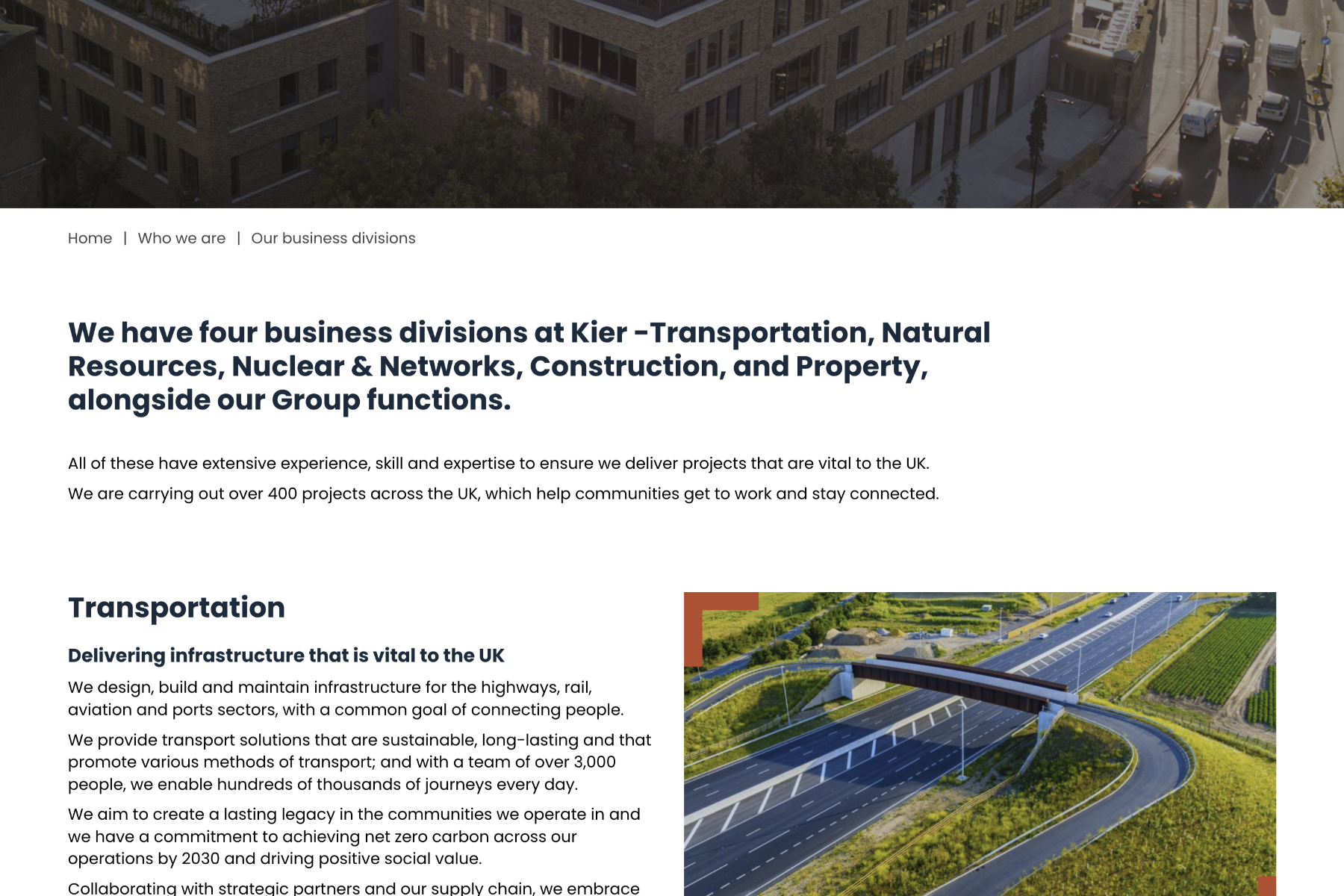
Sending paid traffic to your homepage is one of the most common mistakes construction companies make with Google Ads. A procurement manager who searched for “commercial cladding contractor” and clicked your ad does not want to land on a generic homepage and navigate through your site to find what they need. They want to arrive on a page that immediately confirms you do cladding work, shows evidence of completed projects and makes it straightforward to start a conversation.
Each major service keyword group should point to a dedicated landing page or a well-optimised service page on your website. The page should include a clear headline that matches the search intent, a concise description of your capability in that area, relevant project photography, key accreditations and a prominent contact form or call to action. The goal is to move the visitor from “these could be the right contractor” to “I should get in touch” within thirty seconds of landing on the page.
Page speed matters for paid search performance. Google uses landing page experience as a factor in your Quality Score, which directly affects how much you pay per click and where your ads appear. A slow page costs you twice: once through higher click costs and again through visitors who leave before the page loads. Construction websites loaded with high-resolution project photography need to be optimised for speed without sacrificing visual quality. Compressed images, lazy loading and proper caching make a measurable difference to conversion rates and campaign economics.
Tracking Conversions and Measuring Return
Without proper conversion tracking, Google Ads for a construction company is flying blind. You need to know exactly which keywords, ads and campaigns are generating genuine enquiries, not just clicks. Setting this up correctly from the start saves weeks of confusion later when you are trying to work out where your budget is delivering returns.
Form submissions are the most straightforward conversion to track. Every enquiry form on your website should fire a conversion event when submitted. That event should then be imported into your Google Ads account. Phone calls require additional tracking. Google’s call tracking forwards numbers let you attribute phone enquiries back to the specific ad and keyword that triggered them. For construction companies where phone enquiries are common, this data is particularly valuable.
Attribution in construction is complicated by long sales cycles. A quantity surveyor might click your ad in January, bookmark your site, return organically in March and submit an enquiry in May that leads to a contract in September. Standard last-click attribution would credit that conversion to the organic visit in March, missing the role paid search played in the initial discovery. Consider using data-driven attribution or position-based models that give credit to the first touchpoint as well as the last.
Return on ad spend in construction should be measured against pipeline value, not just lead count. Ten leads from Google Ads might produce two tender invitations, one of which converts to a contract worth several hundred thousand pounds. That single contract makes the entire campaign profitable many times over. PPC management for construction requires this longer-term view. Monthly lead counts matter, but the real question is whether your paid search investment is contributing to your contract pipeline over a six to twelve month period.
Budget Allocation and Ongoing Management

Setting the right budget for construction Google Ads depends on your geographic scope, the number of service lines you want to advertise and the competitiveness of your market. As a starting point, firms new to paid search should allocate enough daily budget to generate a meaningful volume of clicks across their core keyword groups. Running too thin across too many campaigns means none of them get enough data to optimise properly.
A common approach is to start with your highest-margin or most in-demand services and expand from there. If commercial fit-out work is your priority, concentrate budget on fit-out keywords first. Once that campaign is generating a consistent flow of qualified enquiries, add budget for your next service category. This phased approach lets you build on what is working rather than spreading budget across every service from day one and struggling to identify what is effective.
Ongoing management is not optional. Google Ads campaigns that are set up and left to run without regular attention deteriorate over time. Search terms drift, competitors enter the auction, ad copy becomes stale and landing pages fall out of alignment with current campaigns. Weekly reviews of search terms, monthly performance analysis and quarterly strategy reviews keep campaigns sharp and budget focused on what is delivering results.
Seasonal patterns affect construction search volumes too. Tender activity often increases after the new financial year in April. Public sector procurement follows its own cycle too. Adjusting budgets to match these patterns means spending more when your target audience is most active and pulling back during quieter periods. A well-managed campaign adapts to the rhythms of the construction procurement calendar rather than running at a flat rate throughout the year.
The firms that get the strongest returns from Google Ads in construction are the ones that treat it as a long-term channel, not a short-term experiment. Paid search compounds over time as you build conversion data, refine targeting and improve landing pages. Giving up after three months because results were modest misses the point. The construction companies seeing the best results from Google Ads are typically twelve months or more into their campaigns, with refined keyword lists, strong Quality Scores and a clear understanding of which searches turn into contracts.
FAQs
Do Google Ads work for construction companies?
Google Ads work well for construction companies because the contract values at stake make even high cost-per-click terms commercially viable. A single conversion that leads to a six-figure contract justifies months of ad spend. Search campaigns capture procurement-level intent from people actively looking for contractors, which makes them particularly effective for high-value B2B services.
How much should a construction company spend on Google Ads?
Budgets vary depending on the services you offer, the locations you target and how competitive the keyword auction is. Cost per click for commercial construction terms typically ranges from several pounds to fifteen pounds per click. Start with a focused budget targeting your highest-value services in specific locations, then scale based on the quality of enquiries generated.
What type of Google Ads campaign is best for construction?
Search campaigns are the most effective starting point for construction companies targeting commercial work. They show text ads to people actively searching for specific services. Negative keyword lists are critical for filtering out residential and DIY searches. Remarketing campaigns can also be effective for staying visible to procurement professionals who visited your site but did not make contact on their first visit.
How do construction companies avoid wasting money on Google Ads?
The biggest source of wasted spend in construction PPC is irrelevant clicks from homeowners looking for local tradespeople. Building strong negative keyword lists that exclude residential terms is the first step. Geo-targeting to the specific areas where you operate prevents spend on out-of-area clicks. Using dedicated landing pages for each service category also improves conversion rates from qualified visitors.

Co-Founder & PPC Specialist at Priority Pixels
Nathan Yendle is Co-Founder of Priority Pixels and a Google Partner specialising in PPC strategy and campaign optimisation. With years of experience managing high-performance Google Ads accounts, Nathan focuses on data-driven decisions that deliver measurable results for B2B businesses and public sector organisations. His expertise spans paid search, display, and remarketing, helping clients maximise ROI through strategic planning and continuous improvement.


 Paul Clapp | 05/01/2026