Google Core Update: What to Expect in July 2025
 Another Google Update has been announced, now happening in July 2025 – earlier than originally anticipated. Google has said that this core update may take up to 3 weeks to rollout, and if March’s shake-up was any indication, this next round could hit just as hard (if not harder). The March 2025 Core Update rolled out over about 14 days (March 13th –27th) and caused significant turbulence in search rankings across industries. No site was too big to be immune: even household names like Amazon, Experian and government domains saw major visibility swings during the last algorithm update. It’s been hinted that we should expect Google core updates more frequently in 2025, so an earlier than anticipated update has continued this trend of refinement, reinforcement and relevance in search results.
What to Expect from the July 2025 Google Core Update
While Google hasn’t issued new advice for the July 2025 update, there are clear signals pointing to what may be in focus.
This article covers:
- Google's Deeper Focus on User Intent and Helpful Content
- Continued Scrutiny of Low-Value or AI-Generated Content
- Better Understanding of Complex Queries
- Google's Core Web Vitals and UX Still Matter
- Authenticity and User-Generated Input
- Google's Ongoing Spam Clean-up and Domain Abuse Crackdowns
- Post Google Algorithm Update: What Should You Do Now?
- Why Google Updates Matter
Google's Deeper Focus on User Intent and Helpful Content
Google will continue to favour pages that satisfy user intent with genuinely helpful answers. Its August 2024 update, for example, aimed to “show more content that people find genuinely useful and less content made just to perform well on Search”. In practice, if your content doesn’t clearly meet the searcher’s query and provide real value, it’s likely to slip in rankings. Google’s own guidance for broad updates is that there’s “nothing special to do” if you’ve been “making satisfying content meant for people” but if not, now is the time to elevate your content quality and relevance. In short, helpful, people-first content will remain at the top.
Continued Scrutiny of Low-Value or AI-Generated Content

The next core update is expected to hit thin, low-value content even harder, including unedited AI-generated text. Google has explicitly expanded its content policies in 2024 to tackle “scaled content abuse,” meaning sites churning out masses of unoriginal or auto-generated pages designed just for Google search ranking. Using generative AI isn’t against the rules, but content that reads as generic fluff or regurgitated facts with no unique insight is going to be vulnerable. Google’s policy is clear that if automation (or even human mass-production) is used primarily to manipulate rankings, it’s considered low-quality. The July update is going to reinforce these standards. If your site is padded with AI-written filler that hasn’t been rigorously edited and fact-checked, expect Google’s algorithms to either ignore it or actively demote it in favour of more original, expert content.
Better Understanding of Complex Queries
Advances in Google’s AI language models (like the Multitask Unified Model, MUM) mean the search engine is continually improving at handling long-form and complex queries. Google is learning to interpret multi-part questions and conversational searches better than ever. The July update will continue to refine these capabilities, rewarding pages that cover topics in depth and with clear structure. If your content comprehensively answers broad or nuanced questions, using helpful subheadings, FAQs and well-organized information you’re more likely to benefit. The goal for Google is to reduce the number of searches a user must perform to get their answer. Pages that address multiple aspects of a query in one place (while staying focused and readable) could see improved rankings, whereas shallow pages targeting single keywords may lose out on those complex, long-tail searches.
Google's Core Web Vitals and UX Still Matter
Google hasn’t moved on from page experience signals like site speed, mobile usability and layout stability. Core Web Vitals remain key ranking factors in 2025. In plain terms: if your site is slow to load, sluggish to respond, or shifts around as it renders, it’s going to hurt your search performance and frustrate users. Mobile page speed is especially critical: a one-second delay in mobile load time can significantly drop conversion rates and Google knows this. The July update will keep enforcing these UX standards.
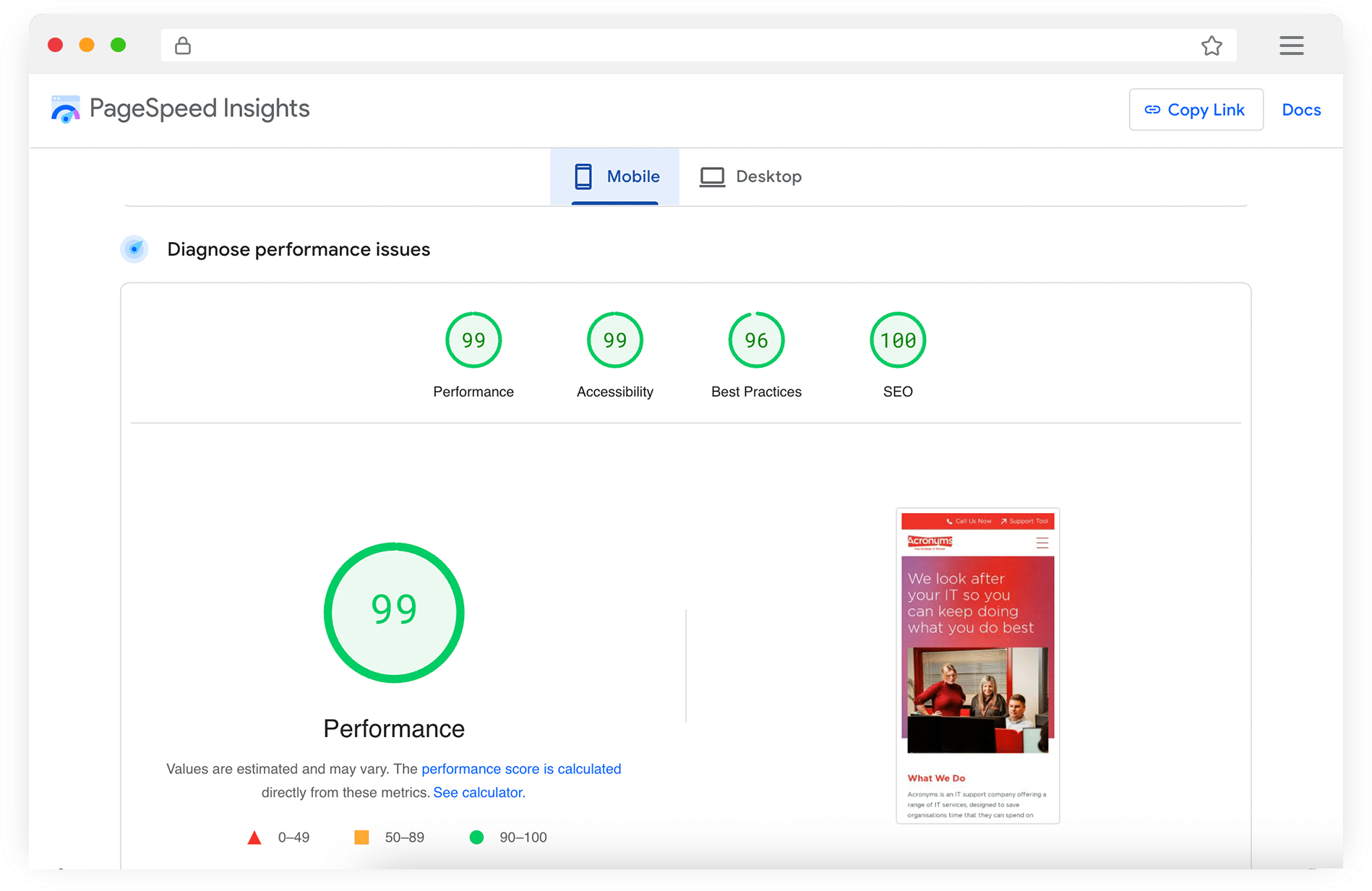 Speed matters. A fast, seamless website keeps users engaged, supports better search performance and delivers a smoother experience across all devices. These PageSpeed Insights scores show what’s possible when performance is prioritised.
Sites that provide fast, seamless, mobile-friendly experiences will be rewarded, while those that “drag” or make users struggle (pinching, zooming, waiting) may see their rankings drop further. Now is the time to fix any lingering page speed or stability issues, these are no longer just technical niceties but necessities for survival online.
Authenticity and User-Generated Input
One noticeable trend is Google’s appreciation for authentic, community-driven content. We’ve seen increased visibility for forums, Q&A sites and user-generated content platforms like Reddit in many search results. Real answers from real people carry weight, they often align closely with what searchers are looking for and feel more trustworthy. For site owners, the takeaway is to embrace genuine user input. If your site has opportunities for reviews, comments, discussion threads or FAQs sourced from customer inquiries, lean into them. Encouraging (and moderating) user reviews or testimonials can boost your site’s E-E-A-T (Experience, Expertise, Authoritativeness, Trustworthiness) by showing you have real user engagement. In July’s update, Google will continue balancing expert content with experience-driven content, a healthy blend is ideal. Just note that thin UGC won’t help, but meaningful user contributions can enhance your site’s credibility in Google’s eyes.
Google's Ongoing Spam Clean-up and Domain Abuse Crackdowns

Each core update also tends to reinforce Google’s war on spammy tactics. We anticipate further purges of low-quality content sites and harsher treatment of tricks like repurposing expired domains or using auto-generated “parasite” pages. In fact, Google introduced new spam policies in early 2024 specifically targeting expired domain abuse and mass-produced content abuse. Google will has had more time to refine these filters. If anyone is still banking on an expired domain’s past reputation or pumping out dozens of low-quality pages hoping something ranks, it’s a ticking time bomb. Similarly, domain reputation abuse hosting third-party content or “guest” pages with little oversight just to piggyback on your domain’s authority is firmly in Google’s crosshairs. The upcoming update will likely reinforce these policies, demoting or deindexing sites that break the rules. In short, playing by the rules and focusing on legitimate, value-added content isn’t just best practice, it’s the only sustainable path as Google tightens the screws on manipulative SEO shortcuts.
Post Google Algorithm Update: What Should You Do Now?
To prepare for this update (and generally boost your SEO health), start with the fundamentals:
- Audit and tighten your key pages: Revisit your most important product, service or content pages. Make sure the copy is clear, concise and directly relevant to what users seek. Remove all unnecessary filler and highlight unique value or expertise that sets you apart.
- Review all AI-generated content critically: Identify any sections written by AI that feel vague, generic or soulless. Rewrite them to add a human touch, updated facts and a clear point of view. Every piece of content should provide insight or solve a problem, not just rehash what’s already on the web.
- Fix mobile UX and speed issues: Run your site through Google’s PageSpeed Insights and Core Web Vitals reports. Address any red flags, compress images, eliminate heavy scripts, improve server response times and ensure your layout doesn’t shift unexpectedly. On mobile, test that buttons and links are easy to tap and pages load within a couple of seconds.
- Improve site structure and schema: Make sure your navigation and internal links make logical sense, both to users and search crawlers. A clear hierarchal structure (with proper use of headings, sections and internal linking) helps Google understand your content depth. Implement schema markup where appropriate (e.g. FAQ schema, product schema), which can give you enhanced listings and help search engines grasp your content context.
- Incorporate authentic user input: Wherever possible, add or augment sections for user reviews, Q&As, case studies or testimonials. Genuine content from customers or community can bolster your credibility. Just moderate it well to keep quality high.
If you haven’t given your site a thorough SEO audit in the last 6–12 months, now is the time. It’s far better to catch and fix issues proactively than to discover them after your traffic drops.
Why Google Updates Matter
Google algorithm updates aren’t random earthquakes; they are intentional adjustments to reward certain qualities and devalue others. We’ve helped clients recover from every major Google update in recent years and one pattern is clear: waiting until your traffic plummets to react puts you way behind the curve. Google itself emphasises that there’s usually no quick fix if your rankings drop from a core update, you need to improve holistically and then wait for Google to reassess. That recovery can take months, sometimes not until the next core update rolls out. In the meantime, you’re losing valuable business. This upcoming July update is a chance to get ahead: shore up your content quality, UX and technical SEO now, so you’re less likely to be hit and may even come out gaining ground.
We will continue to monitor the situation closely and update our guidance as more information becomes available. If you’re unsure whether your site is ready, we’ll tell you straight. Consider booking a full professional SEO audit and get a clear, actionable guide as well as peace of mind, rather than scrambling after the fact. This is your sign to prepare properly, not play catch-up when rankings shift.

Co-Founder & PPC Specialist at Priority Pixels
Nathan Yendle is Co-Founder of Priority Pixels and a Google Partner specialising in PPC strategy and campaign optimisation. With years of experience managing high-performance Google Ads accounts, Nathan focuses on data-driven decisions that deliver measurable results for B2B businesses and public sector organisations. His expertise spans paid search, display, and remarketing, helping clients maximise ROI through strategic planning and continuous improvement.
 Paul Clapp | 17/03/2026