Best WordPress CDN Services for 2025
Performance problems killing your WordPress site’s potential? A content delivery network could be the fix. CDN services store cached copies of your static content across servers worldwide, meaning visitors load pages from whichever server sits closest to them geographically. For any business running WordPress, that translates directly to faster page loads, lower bounce rates and better search rankings.
We’ve tested and worked with most of the major CDN providers through our hosting and development projects. Not all CDNs are created equal though, and the right choice depends on your traffic patterns, budget and how much security you need baked in. Here’s our breakdown of the best WordPress CDN services worth considering in 2025.
Why CDN Performance Matters for Business Websites

Page speed isn’t just a vanity metric anymore. Google’s Core Web Vitals feed directly into search rankings, and visitors who wait more than a couple of seconds for a page to load tend to leave before it finishes. A CDN tackles the biggest chunk of that problem by cutting the physical distance between your server and your visitors.
For ecommerce sites running on WooCommerce, the impact is even more pronounced. Product images, stylesheets and JavaScript files make up the bulk of page weight, and serving those from a nearby edge server rather than your origin can shave seconds off load times. When your product pages load faster, people browse more and abandon fewer baskets.
Traffic spikes can also catch you off guard. A social media post goes viral, a PR campaign drives unexpected attention, or a seasonal sale brings everyone at once. Without a CDN absorbing that demand across multiple servers, your origin hosting can buckle under the pressure. Most CDN providers handle sudden surges without breaking a sweat because the load gets spread across their entire network rather than hitting one server.

1. Rocket CDN
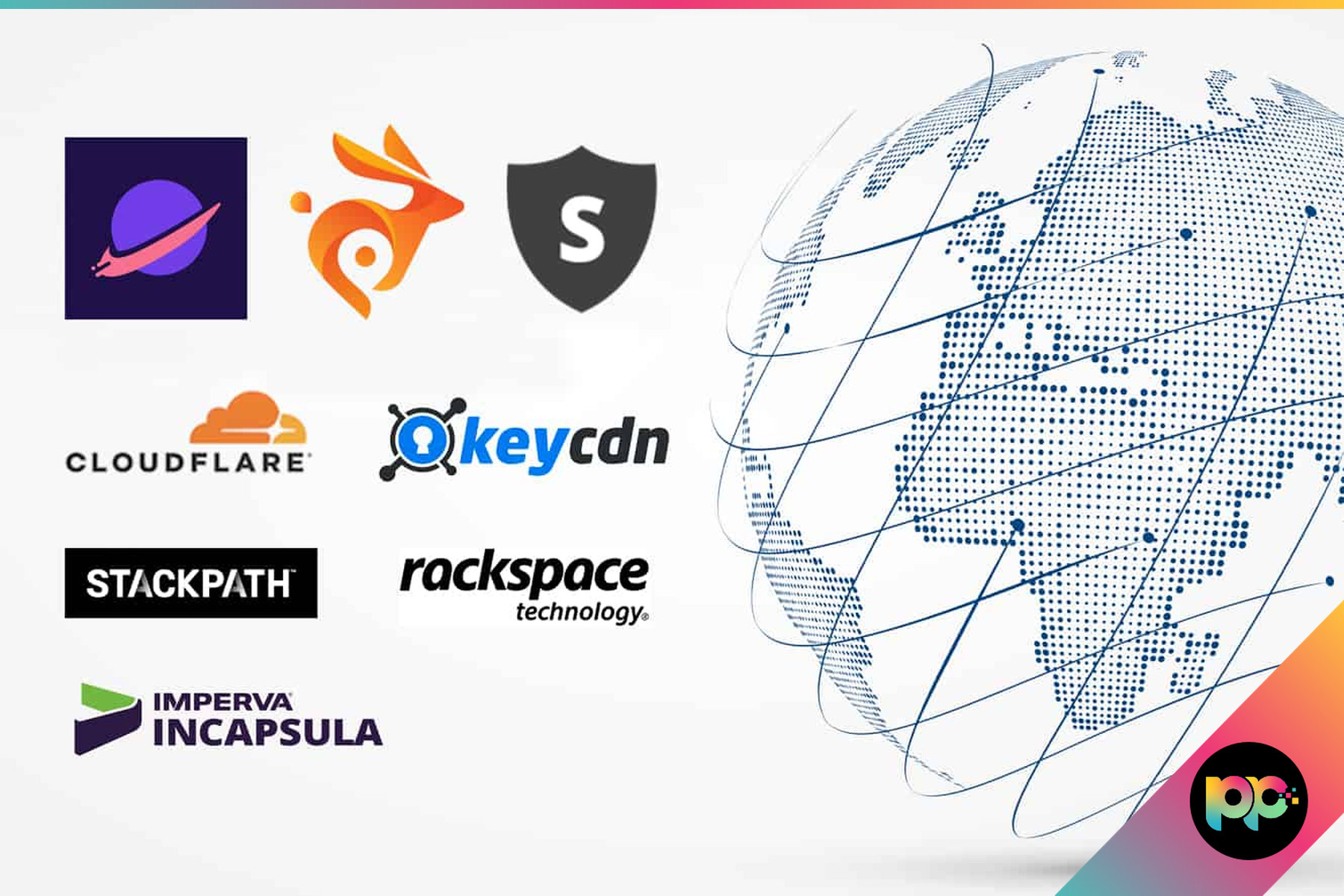
Built by the team behind WP Rocket, RocketCDN is designed specifically for WordPress. It configures automatically with your site, so there is no fiddling with complicated settings or manual integration steps. If you already use WP Rocket for caching, adding their CDN is a natural next step.

2. Bunny
Bunny runs data centres across the globe and keeps pricing straightforward enough for smaller businesses and solo developers. Performance is consistently strong, and the setup process takes minutes rather than hours. A solid option if you want reliability without overpaying.

3. Sucuri
Sucuri combines CDN delivery with a web application firewall, scanning all incoming requests before they reach your hosting server. That means spam, malware and brute force attacks get filtered out at the edge. It is a good fit for sites where security is just as important as speed.

4. Cloudflare
Cloudflare operates one of the largest CDN networks in the world and offers a free tier that covers most small to medium sites. Static content gets cached automatically, and the control panel gives you a clear view of performance metrics. You will need to hand over your DNS nameservers, which some organisations prefer to avoid.
5. KeyCDN
KeyCDN focuses on raw performance with servers spread across North America, Europe and Asia Pacific. You get DDoS protection, free SSL, HTTP/2 support and SSD-backed infrastructure as standard. Pricing is pay-as-you-go with no monthly minimums, which keeps costs predictable for smaller sites.

6. StackPath
StackPath evolved from MaxCDN into a broader edge computing platform, but the CDN service remains solid. Built-in DDoS protection and a web application firewall come with every plan. The network covers most major regions and performance holds up well under traffic spikes.

7. Rackspace
Rackspace delivers its CDN through cloud infrastructure that integrates well with WordPress and popular plugins. If you are already using Rackspace for hosting, adding their CDN keeps everything under one roof. The managed service approach means less hands-on configuration for your team.
8. Imperva Incapsula
Imperva runs servers in key locations globally, including South America where coverage from other providers can be patchy. Setup is straightforward, and you get SSL, DDoS mitigation and round-the-clock support included. They also offer a free CDN tier for smaller sites.
How to Choose the Right CDN for WordPress
Picking a CDN isn’t just about who has the most servers. You need to think about where your actual visitors are, how your site is built, what your budget looks like and whether you need security features bundled in or handled separately.
Server locations matter more than total server count. A CDN with 200 servers concentrated in North America won’t help much if most of your traffic comes from Europe or Asia-Pacific. Check the provider’s network map against your analytics data and make sure they’ve got strong coverage where your audience actually sits.
WordPress compatibility varies more than you’d expect. Some CDNs offer dedicated WordPress plugins that handle cache purging automatically when you update a post or change a product price. Others need manual configuration or rely on third-party caching plugins to manage the connection. The smoother that integration, the less time you’ll spend troubleshooting cache issues down the line.
Cost structures differ significantly between providers too. Some charge per bandwidth, others per request, and a few offer flat-rate plans. For sites with predictable traffic, flat-rate pricing gives you budget certainty. For sites with unpredictable spikes, pay-per-use might work out cheaper most months but could surprise you when traffic surges.
The best CDN for your site depends entirely on your traffic patterns and where your visitors are located. A provider with strong European coverage won’t help if most of your customers are in Asia-Pacific. Always check the network map against your actual analytics data before committing.
CDN Security Features Worth Considering

Several CDN providers now bundle security tools alongside their delivery networks. DDoS protection, web application firewalls and bot mitigation come standard with some services, whilst others charge extra or leave security to separate products entirely.
For WordPress sites specifically, having a WAF at the CDN level means malicious requests get blocked before they ever reach your server. That matters because WordPress sites face constant automated attacks, from brute force login attempts to vulnerability scanners probing for outdated plugins. Blocking those at the edge reduces server load and closes off attack vectors at the same time.
SSL certificate management is another factor worth weighing up. Most CDNs provide free SSL and handle certificate renewal automatically, but the implementation details vary. Some support wildcard certificates for subdomain coverage, others require manual configuration for each domain. If you’re running a multisite WordPress setup or operating across several domains, check how the CDN handles SSL before signing up.
The HTTP caching standards that underpin CDN delivery also play a role in security. Proper cache-control headers prevent sensitive content from being stored at edge nodes, which matters if your site serves any personalised or authenticated content alongside public pages.
Integrating a CDN with Your WordPress Hosting
Getting a CDN working with WordPress usually means updating your DNS records to point through the CDN provider, then configuring cache rules so the right content gets served from edge servers while dynamic pages still hit your origin. Most providers walk you through this, but the details vary depending on your hosting setup and which caching plugin you’re using.
Cache invalidation is where things get fiddly. Update a blog post and you need the CDN to drop its cached copy so visitors see the new version. Good WordPress CDN plugins handle this automatically by sending purge requests whenever content changes. Without that automation, you’re manually clearing caches every time you make an edit, which gets old fast.
Image optimisation is another area where CDNs vary. Some providers will automatically convert images to WebP format and resize them for different screen sizes on the fly. Others serve whatever your WordPress media library gives them. Given that images typically account for the majority of page weight, a CDN that handles optimisation at the edge can meaningfully reduce bandwidth costs and improve load times without you touching a single image file.
Testing your CDN setup properly means checking from multiple locations, not just your own browser. Tools like PageSpeed Insights give you a performance snapshot, but testing from different geographic regions tells you whether the CDN is actually serving cached content where it should be.
CDN Services at Priority Pixels
We configure CDN connections as part of our WordPress development and technical SEO work, making sure the caching rules, security settings and cache invalidation all work properly from day one. Getting these details right at setup saves hours of troubleshooting later when content updates aren’t appearing or pages are loading stale versions.
Every site we build gets assessed for CDN suitability based on its traffic patterns, hosting environment and performance targets. Not every WordPress site needs a full CDN, smaller sites with UK-only traffic sometimes get more benefit from proper server-side caching and image optimisation. But for sites with international visitors, heavy media content or performance-critical landing pages, a CDN is usually one of the highest-impact improvements we can make.
If you’re not sure whether your current setup is getting the most out of its hosting, or whether adding a CDN would make a measurable difference, we’re happy to take a look. A quick performance audit usually tells us where the bottlenecks are and whether a CDN is the right solution or whether there’s something simpler to fix first.
FAQs
How much does a WordPress CDN actually cost for a typical business website?
Most small to medium businesses can start with Cloudflare’s free tier or KeyCDN’s pay-as-you-go pricing at £0.04 per GB. Expect monthly costs between £0-50 for typical business traffic volumes. The performance improvements usually pay for themselves through better conversion rates and search rankings.
Will setting up a CDN break my existing WordPress plugins or theme functionality?
Modern CDN providers offer WordPress-specific plugins that handle integration automatically without breaking your site. The main thing to watch is SSL configuration – your CDN needs proper certificates to avoid mixed content warnings. Most issues come from manual setups rather than using the dedicated WordPress plugins.
How quickly will I see performance improvements after implementing a WordPress CDN?
Changes are typically visible within minutes of proper setup, with international visitors seeing the biggest improvements. Use tools like GTmetrix or Pingdom to measure before and after performance – many sites see significantly faster loading times for visitors outside their hosting location.

Co-Founder at Priority Pixels
Paul leads on development and technical SEO at Priority Pixels, bringing over 20 years of experience in web and IT. He specialises in building fast, scalable WordPress websites and shaping SEO strategies that deliver long-term results. He’s also a driving force behind the agency’s push into accessibility and AI-driven optimisation.