





Conversion Gaps
Attracting traffic to your website achieves little if those visitors leave without converting. Poor page layouts, vague calls to action or unnecessarily complex forms all cost you customers every day. Our conversion rate optimisation services analyse how users behave on your site, pinpoint where they abandon their journey and fix those problems through testing and data analysis.
Behavioural Insight
Heatmaps and session recordings show us where people click, where they scroll to and where they give up. We see the navigation paths that confuse them, the forms they start but never finish and the content they ignore completely. This insight becomes even more powerful when supported by AI-powered SEO, helping ensure the right audiences arrive on your site in the first place.
Real Improvement
This is not about applying generic best practices. We build strategies around your specific audience using real data from your website to make changes that actually improve your conversion rates and deliver measurable commercial impact.
How the Sales Funnel Impacts Conversion Rates
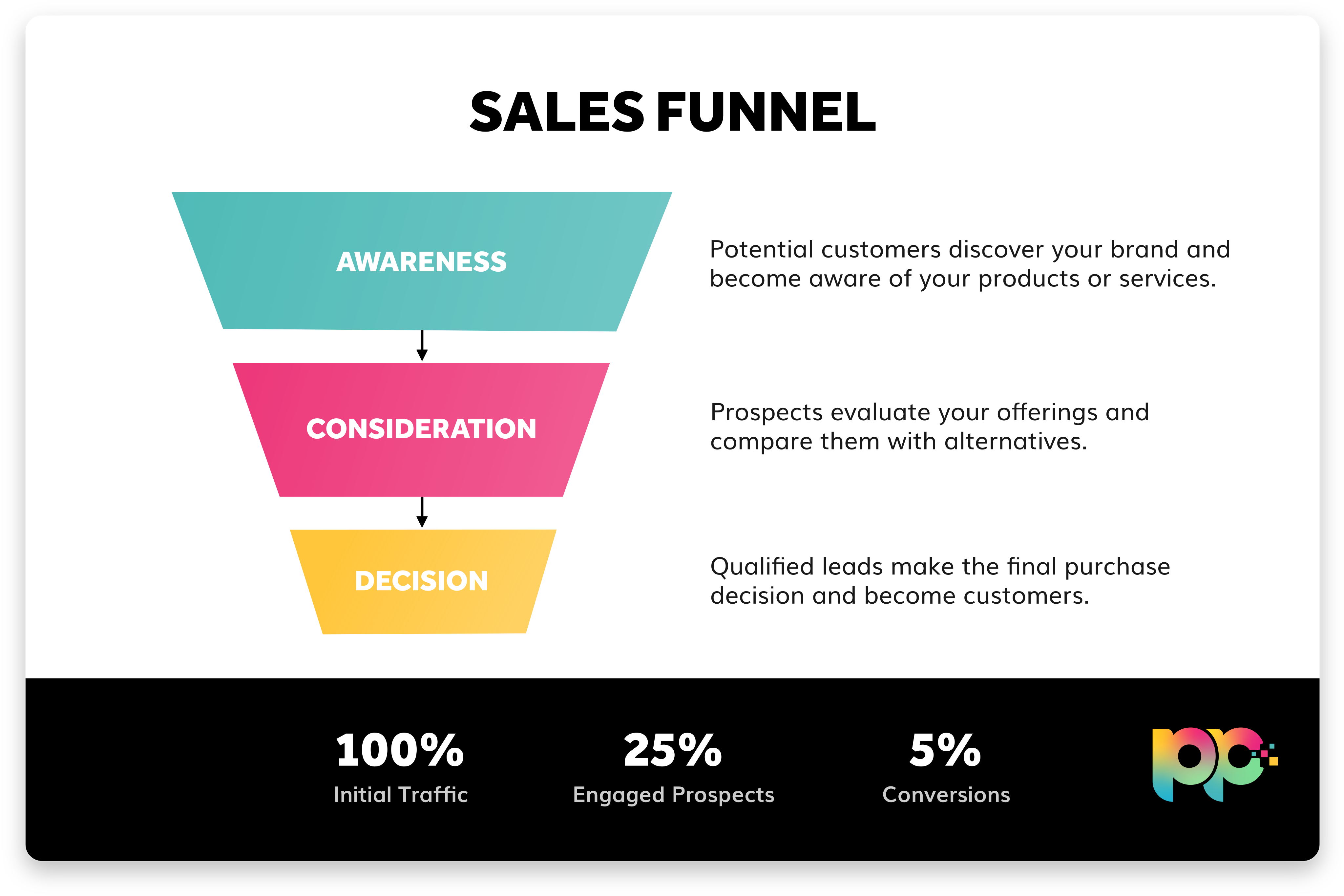
Different funnel stages create different problems. Someone discovering your business for the first time needs different information from someone ready to make a purchase decision. Drop-offs happen when messaging doesn’t match where people are in their journey, when navigation becomes unclear or when visitors can’t quickly find the answers they need. Analysing funnel flow shows us exactly where these problems occur.
We focus on each stage individually.
- Top-of-funnel content should attract the right people, not just high volumes of traffic.
- Mid-funnel pages need to build trust and answer concerns.
- Bottom-of-funnel elements must make conversion as straightforward as possible.
Better navigation, clearer calls to action and content that actually answers questions all push more people through to completion. The improvements add up because each fix reduces friction at a different point.
Our Conversion Rate Optimisation Services
UX Optimisation
Poor user experience loses conversions before visitors even consider taking action. Confusing layouts make it hard to find information. Broken navigation sends people in circles. Pages that don't work properly on mobile frustrate users who simply leave. We rebuild your site structure around how people actually want to move through it, removing obstacles and simplifying the path to conversion. Better usability means more completed actions.
User Behaviour Analysis
Guessing at what users want rarely works. Heatmaps, session recordings and funnel tracking show you what's actually happening. Where do people click? How far down the page do they scroll? Which form fields make them abandon the process? This data answers those questions precisely. Once you know where the problems are, you can fix them rather than hoping your assumptions were correct.
Search Intent Analysis
Someone searching "WordPress hosting" has different needs from someone searching "migrate WordPress site". The words look related but the intent isn't. Understanding that distinction matters because your content and calls to action need to match what people actually want when they land on your page. Get the intent right and engagement improves because you're delivering what visitors came to find.
Accessibility Compliance
WCAG 2.2 AA compliance isn't optional. Making your website accessible to people with disabilities expands who can use your site whilst meeting your legal responsibilities. Screen readers need to work with your navigation. Colour contrast needs to be sufficient for people with visual impairments. Content needs to be readable regardless of how someone accesses it. Proper accessibility also makes your site more usable for everyone.
Content That Converts
Vague copy that doesn't address what visitors care about won't convert them. You need messaging that speaks to real concerns, with a clear next step that makes sense. Strong writing combined with thoughtful page design creates an environment where conversion feels like the natural conclusion rather than a hard sell. When content matches what people are looking for, they act on it.
Reporting
Conversion rates don't stay fixed. User behaviour changes. Your competitors adjust their approach. Your business develops new priorities. Regular tracking through Google Analytics, heatmaps and behaviour analysis spots these shifts early. We test new ideas, measure what happens and adjust based on the results. This ongoing work keeps your site performing rather than letting it decline.
Our Conversion Rate Optimisation Case Studies
See how our conversion rate optimisation work has helped businesses turn more website visitors into enquiries through data-led testing and user experience improvements.


Why Conversion Rate Optimisation Matters
Getting people to your website costs money. Losing them because your site doesn’t work properly wastes that investment. CRO fixes the problems that stop visitors from taking action, whether that’s slow loading pages, unclear messaging or frustrating user experiences.
Conversions fail for specific reasons. Your forms might ask for too much information upfront. Your value proposition might not be clear enough. Your calls to action might be positioned where nobody notices them. These aren’t abstract problems. Data shows exactly where visitors lose interest and exit.
The Science Behind CRO: Data and Testing
Assumptions about what might improve conversions are usually wrong. Data shows what’s actually happening. Google Analytics reveals where people enter your site and where they leave. Hotjar shows where they click and how far they scroll. This evidence makes optimisation decisions reliable rather than speculative.
A/B testing compares two versions of a page to see which converts better. Change a headline, move a button or simplify a form, then measure the difference. The version that performs better becomes your new baseline. You then test something else. Multivariate testing takes this further by testing multiple elements at once, showing how different components work together or interfere with each other.
The work never really stops. User behaviour shifts over time, so what worked six months ago might underperform now. Continuous testing and measurement keep your conversion rates climbing. Priority Pixels treats CRO as an ongoing discipline rather than a project with an end date.
User Behaviour and Heatmap Analysis
Heatmaps show exactly where visitors click, how far they scroll and which parts of your pages get ignored. High-activity areas appear in red, neglected sections in blue. This visual data immediately reveals whether your important elements are positioned where people actually look.
Session recordings go deeper by showing individual journeys from start to finish. You can watch someone struggle with your navigation, abandon your form halfway through or completely miss your call to action. These observations identify specific usability problems rather than vague theories about what might be wrong.
The insights drive targeted fixes. If people don’t scroll far enough to see your key content, you need to restructure your page. If visitors keep clicking on something that isn’t clickable, either make it functional or remove the confusion. If a particular form field causes abandonment, remove it or explain why it’s necessary. Each change addresses a real problem observed in actual behaviour.
A/B Testing and Experimentation
Running experiments answers questions that data alone can’t. Will a different headline convert better? Does moving the call to action higher on the page increase sign-ups? Does reducing form fields improve completion rates? Testing finds out rather than leaving it to speculation.
You create two versions, split your traffic between them and measure the results. Headlines, button text, form length, page layouts, images – anything can be tested. The data shows which variation performs better with your specific audience. What works for one site often fails for another, so testing with your actual traffic is the only reliable method.
Multivariate testing looks at how multiple changes interact. Sometimes combining several small improvements creates a larger effect than any individual change would. Other times, changes that should work together actually interfere with each other. Testing reveals these dynamics so you only implement combinations that genuinely improve performance.
The cycle repeats constantly. Test, measure, implement the winner, then test something else. This systematic experimentation builds conversion rates through accumulated gains rather than hoping for a single breakthrough.
Landing Page and Funnel Optimisation
Landing pages exist to convert visitors. Slow loading times, confusing layouts or weak messaging all cause people to leave before conversion becomes possible. Clear communication, fast performance and obvious calls to action form the foundation of pages that work.
Forms need particular attention. Ask for too much information and people abandon them. Make fields unclear and people fill them in incorrectly. Position them poorly and people never find them. Every element of your landing page either helps or hinders conversion, so each one needs deliberate optimisation.
Conversion funnels show the complete path from arrival to goal completion. Track where people enter, which pages they visit and where they exit. High drop-off at a particular stage signals a problem worth investigating. Maybe that page loads slowly. Perhaps the messaging becomes unclear at that point. The form might be more complex than it needs to be. Funnel analysis identifies these bottlenecks so you can fix them in order of impact.
Mobile CRO and UX Improvements
More than 60% of web traffic comes from mobile devices. If your site works poorly on phones, you’re losing most of your potential conversions. Mobile optimisation isn’t just about responsive design – it’s about rethinking how people interact with smaller screens and touch interfaces.
Page speed matters more on mobile because connections are often slower. Forms need fewer fields because typing on phones is awkward. Buttons need proper sizing because fingers aren’t as precise as mouse cursors. Navigation must work without hover states because touchscreens don’t support them. These constraints require different solutions from desktop optimisation.
Mobile-specific testing catches problems that only appear on smaller screens. Maybe your navigation becomes unusable at certain widths. Perhaps images don’t load correctly. Your form might extend below the fold where nobody sees the submit button. Testing on actual mobile devices finds these issues before they cost you conversions.
Tracking and Measuring Conversions
You can’t improve what you don’t measure. Bounce rates, conversion rates, time on page, form completion rates – these metrics show whether your optimisation work is succeeding. Without measurement, you’re making changes blind.
Google Analytics tracks major conversions like purchases or enquiries. Smaller interactions – video views, downloads, scrolling to key content – indicate engagement even when people don’t convert immediately. Both matter because these smaller actions often predict conversions later.
Regular analysis catches problems early and spots opportunities quickly. Maybe a particular traffic source brings visitors who rarely convert. Perhaps a specific page consistently underperforms compared to similar content. These patterns only emerge through systematic tracking and review. The data guides where to focus effort for maximum impact.
Integrating CRO with SEO and Paid Media
SEO brings visitors to your site. PPC does the same through paid channels. Both become more effective when the pages people land on actually convert. Ranking first for your target keyword achieves little if your landing page fails to turn that traffic into customers.
The connection works both ways. Better conversion rates mean you can afford to pay more per click in PPC campaigns whilst staying profitable. Higher conversion rates from organic traffic increase the return on your SEO investment. Everything becomes more efficient when CRO, SEO and paid media work together rather than in isolation.
Page experience affects rankings too. Core Web Vitals, mobile usability and overall user experience all contribute to how Google evaluates pages. CRO improvements that speed up load times, fix mobile issues and improve user experience also support your SEO performance. We integrate these disciplines so improvements in one area reinforce the others rather than creating conflicts.
FAQs
What is CRO and how will it help my website?
CRO stands for Conversion Rate Optimisation. We analyse why visitors aren’t converting on your site, then test changes to fix those problems. This could be simplifying your forms, repositioning calls to action or improving page layouts. The work is based on data from your actual users – heatmaps, session recordings, A/B testing – rather than generic assumptions. You get more conversions from your existing traffic without needing to spend more on advertising.
Why should I invest in CRO rather than just buying more traffic?
Traffic costs money. If most visitors leave without converting, you’re wasting that investment. CRO improves conversion rates from traffic you’re already paying to attract. Even a 1-2% improvement can significantly increase revenue. It’s often more cost-effective than buying additional traffic, particularly if your current conversion rates are below industry benchmarks for your sector.
How will I know if CRO is working?
We track conversion rates, bounce rates, form completions and engagement through Google Analytics and Hotjar. You’ll see which changes improve performance and by how much. A/B testing shows clear comparisons between versions. We provide regular reports showing what’s improving, what’s being tested and where opportunities exist. The data removes guesswork about whether changes are helping or hindering performance.
Will CRO conflict with my SEO efforts?
No. CRO and SEO support each other. SEO brings visitors through organic search. CRO converts them once they arrive. Many CRO improvements – faster page speed, better mobile usability, improved user experience – also help search rankings. We work with your SEO strategy to ensure optimisation for conversions supports rather than conflicts with your organic visibility.
How long will it take before I see results?
Depends on your traffic volume and what needs fixing. Quick wins like page speed improvements or mobile fixes can show results within 2-4 weeks. A/B testing takes longer – typically 4-8 weeks per test – because we need statistically significant data for reliable conclusions. Most businesses see measurable improvements within 2-3 months. CRO is ongoing work though, not a one-time project. User behaviour changes, so testing and refinement continue.
Does your service include A/B testing?
Yes, A/B testing is fundamental to effective CRO. We test different versions of headlines, calls to action, layouts and forms to see what works better for your audience. Different versions go to different visitors, then we measure performance. The better version becomes your baseline. Then we test something else. This systematic approach produces sustained improvement rather than relying on single changes that might not work.
Our Technology Partners






Our SEO News
The latest on search engine optimisation, including algorithm updates, technical SEO and content strategies that drive organic growth.
Search Engine Optimisation Services: What They Should Include in 2026
You know the drill. Every SEO services from Priority Pixels pitch sounds identical. “We’ll get you to page one!” they shout. “Traffic will explode!” But what exactly are you buying? And half these agencies can’t even explain their own process. So here’s the real deal on what SEO should look like in 2026. Google’s gotten […]
 Paul Clapp | 18/03/2026

 Nathan Yendle | 05/03/2026

Paul Clapp | 02/03/2026

Paul Clapp | 27/02/2026
Paul Clapp | 26/02/2026

Every project starts with a conversation. Ready to have yours?
Start your project