
How to Build a Technical SEO Strategy That Improves Crawling and Indexing
If your website isn’t showing up where it should in search results, the problem might not be your content or your backlinks. It could be that search engines are struggling to crawl and index your pages properly. A solid technical SEO strategy addresses the foundations that sit beneath everything else, making sure search engines can find, understand and rank your content without friction. For businesses serious about organic growth, investing in technical SEO services for complex websites is one of the most effective ways to build long-term visibility.
Your site’s basic infrastructure decides whether all that content creation and outreach works. Page loading speeds beat keyword density every time and XML sitemaps need to guide search engine bots to exactly the right places.
Unlike algorithm changes or competitor moves, you’ve got direct control over most technical SEO elements. Site audits show you what’s broken so you can fix it. Once you know what to check, keeping your technical health in shape becomes second nature and we’re going to walk through the main pillars plus give you steps that work for getting search engines to crawl and index your site properly. Strategy decisions sit on top of our wider piece on technical SEO services.
Understanding Crawling and Indexing
Bots find your pages by hopping from link to link. During this crawling process they’re reading your content and code, then making decisions about whether each page earns a place in their index database. Search engines pull from that index when they show results to users.
Pages that can’t be crawled won’t get indexed and pages that aren’t indexed never appear in search results. Your content could be excellent but it won’t matter. Google’s own documentation on crawling and indexing shows that Googlebot uses algorithms to choose which sites to crawl, how often to visit and how many pages to fetch each time, so your job is making their work as simple as possible.
Thousands of low-value pages eat up your crawl budget while important content gets buried so deep that crawlers give up looking. Your robots.txt file blocks pages without you knowing and suddenly you’re wondering why traffic dropped. Pages fail to get indexed for completely different reasons and each one needs its own fix.
Auditing Your Site’s Current Technical Health
We always start by mapping out where things stand with crawlability, indexation, site speed, mobile performance, structured data and security. Ahrefs Site Audit gives you a useful overview and ranks problems by how urgent they are. You can’t fix what you don’t understand.
Which pages made it into the index, which got rejected and exactly why they failed. Google Search Console’s Coverage report tells you everything. “Crawled but not indexed” means one thing while “Blocked by robots.txt” means something completely different. Each exclusion reason points you towards a specific fix.
| Search Console Status | What It Means | Typical Fix |
|---|---|---|
| Crawled, currently not indexed | Google found the page but chose not to index it | Improve content quality, add internal links, consolidate thin pages |
| Discovered, currently not indexed | Google knows the URL exists but hasn’t crawled it yet | Improve internal linking, reduce crawl budget waste |
| Blocked by robots.txt | Your robots.txt file is preventing crawling | Review and update robots.txt directives |
| Excluded by noindex tag | A noindex meta tag or header is present | Remove the noindex directive if the page should be indexed |
| Duplicate without canonical | Multiple versions of the same content exist | Set canonical tags to the preferred version |
Clean up your sitemap so it only includes the URLs you want crawlers to find. We’ve seen sitemaps stuffed with 404 errors, redirect chains and pages that shouldn’t be indexed at all. Don’t forget your XML sitemap during the audit process and make sure it stays current as your site grows.
Optimising Your Robots.txt and XML Sitemap
Both robots.txt and XML sitemaps let you have proper conversations with search engines about your site structure. Your robots.txt sits at the domain root and tells crawlers exactly what they can access. People constantly block CSS or JavaScript directories without thinking it through, which stops Google rendering pages correctly. And if Google can’t see how your pages look, they won’t index them properly. Use Google Search Console’s robots.txt Tester to check you haven’t accidentally blocked something.
Clean XML sitemaps work like curated guest lists for search engines. WordPress plugins like Yoast SEO build these automatically but you still need to verify what gets included. Yoast’s sitemap guide shows why removing redirected URLs, noindexed pages and useless parameter URLs keeps your crawl budget focused on pages that matter.
# Example robots.txt for a WordPress site
User-agent: *
Disallow: /wp-admin/
Allow: /wp-admin/admin-ajax.php
Disallow: /cart/
Disallow: /checkout/
Disallow: /my-account/
Disallow: /*?s=
Disallow: /*?p=

Sitemap: https://example.com/sitemap_index.xml
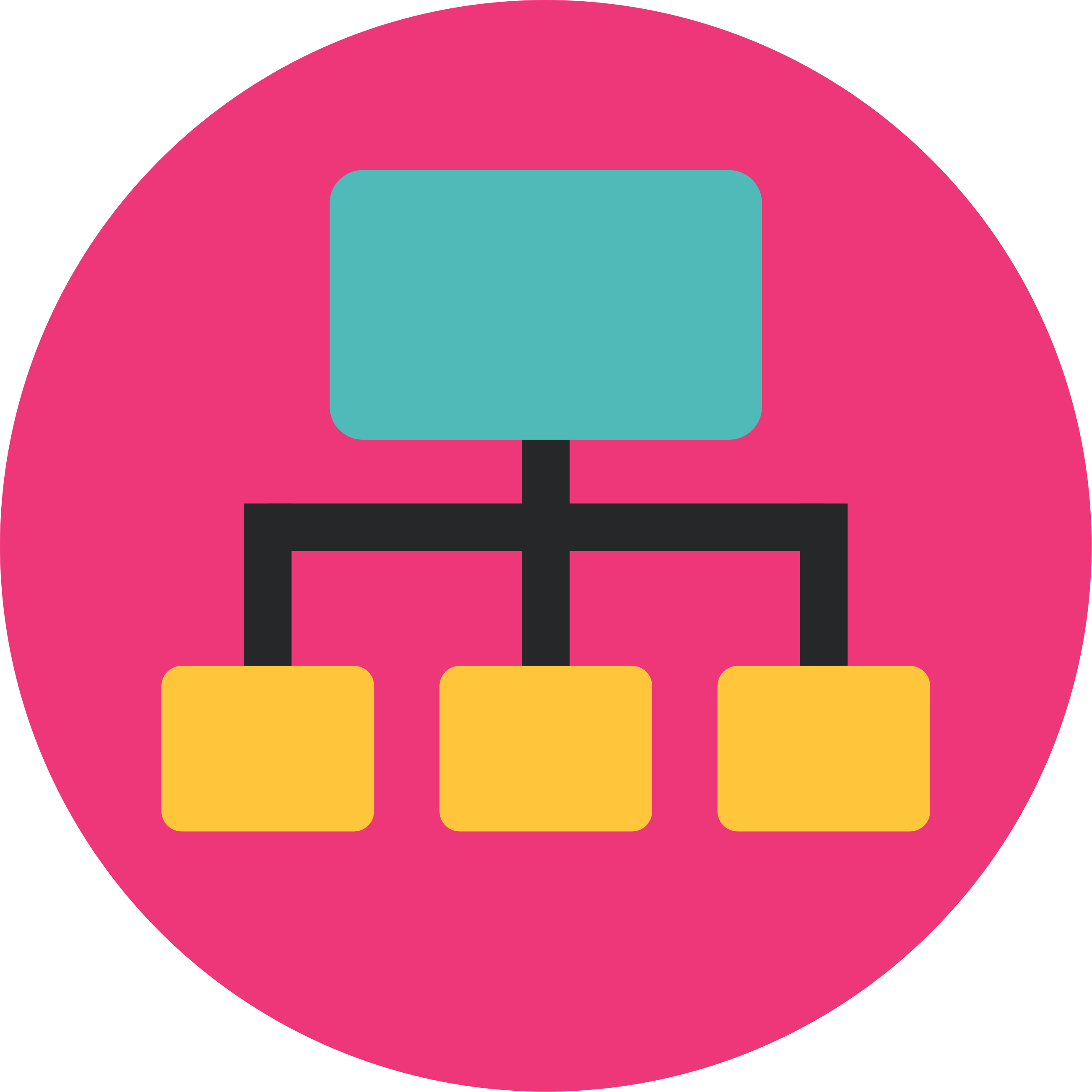
Crawler efficiency depends entirely on sensible site architecture. Important pages should live within a few clicks of your homepage, not hidden six levels deep where crawlers barely venture and internal link juice gets watered down to nothing.
Two or three clicks from your homepage keeps both crawlers and users happy. But dumping everything at the top level creates its own problems. Smart category structures backed by logical internal linking patterns work much better. An experienced SEO team can spot structural issues you’ve been overlooking for months.
Why aren’t your pages ranking? Check your internal linking first because most sites treat it like an afterthought. Search engines use these connections to understand which pages deserve attention and how your content fits together. But pages with zero internal links pointing to them become invisible to crawlers and you’re effectively throwing away ranking opportunities. Moz’s internal linking guide shows you how smart linking helps search engines map your content while channelling authority to the pages that need it most.
- Link from high-authority pages to important but underperforming pages
- Use descriptive anchor text that reflects the target page’s content
- Audit for orphan pages regularly and add links where appropriate
- Avoid excessive links on a single page, as this dilutes the value passed to each linked page
- Create content hubs where related pages link to each other and to a central pillar page
Users and crawlers understand your site instantly when URLs reflect what’s on each page and match your hierarchy. Short, descriptive URLs that include relevant keywords perform better than long strings of parameters or randomly generated IDs. Consistent URL patterns across your site also make it easier to spot structural problems during audits.
Page Speed and Core Web Vitals
Page speed affects your rankings and Google’s made that crystal clear for years. Core Web Vitals turned up the heat by defining exactly what good performance looks like. Your crawl budget suffers when pages load slowly because search engines won’t waste time on sluggish sites.
Core Web Vitals breaks down into three metrics that each measure different parts of user experience. Largest Contentful Paint tracks loading speed and you’ve got 2.5 seconds to get it right or you’re in the danger zone. Interaction to Next Paint shows how responsive your site feels when people try to click things. Cumulative Layout Shift catches those frustrating moments when content jumps around during loading and ruins the experience.
Images that haven’t been compressed properly will drag your site down, along with too many plugins and CSS blocking the render process. WordPress websites get destroyed by poor hosting faster than anything else, though it’s never just one problem. Server-side fixes and front-end optimisation need to work together. Set up proper caching, defer non-critical scripts and compress those large image files because quality hosting alone won’t save you.
Speed isn’t just about user experience. It directly affects how efficiently search engines can crawl your site, how many pages get discovered and how often Googlebot returns.
Google Search Console’s Core Web Vitals report gives you the overview while PageSpeed Insights breaks down individual pages. Googlebot gets impatient with slow response times and crawls less often, so fewer pages end up discovered and indexed. Most people treat performance like something you fix once and forget about. Every plugin you add or design change can cause problems if you’re not watching the numbers.
Structured Data and Schema Markup
Rather than making search engines guess what your content means from HTML alone, schema markup spells it out clearly. Rich results start appearing once you’ve got structured data sorted: star ratings show up, FAQ sections expand right in search results, breadcrumb trails guide people to click through.
JSON-LD became the standard because Google recommends it and for good reason. Organisation, LocalBusiness, Article, BreadcrumbList, FAQPage and Product schema types cover most business sites perfectly. But check the full range at Schema.org because there’s probably something specific for your content type.
Run your markup through Google’s Rich Results Test and the Schema Markup Validator before publishing. Search Engine Journal’s structured data guide warns that incorrect markup can trigger manual penalties, so accuracy matters. Schema specifications evolve constantly and new types get added, which means revisiting your markup at least quarterly to make sure nothing has fallen out of date.
HTTPS, Security and Crawl Accessibility
HTTPS became mandatory years ago and browsers now actively scare users away from insecure sites. SSL certificates won’t protect you on their own though. Update your CMS religiously, check plugins for vulnerabilities, lock down file permissions and scan for malware because search engines won’t rank sites they can’t trust. Google drops compromised sites from results entirely when they detect malicious content and recovery requires cleaning up every infection first.
Reliable server performance keeps Google’s crawlers happy. Sites that go down frequently send signals that they’re not worth ranking highly. Slow response times and random 5xx errors create the same problem. Reliable web hosting and infrastructure does more than keep your site online, it provides the technical foundation that makes everything else possible.
Building Your Technical SEO Action Plan
Critical issues get fixed first because they’re directly stopping search engines from doing their job. We’re dealing with robots.txt files that block your best pages, canonical tags pointing to dead ends and server errors crawling across your entire site like a virus. High-priority problems come next since they’re damaging performance and user experience. Slow Core Web Vitals scores and missing structured data that could be pushing your rankings up the search results. Minor issues like redirect chains and missing alt text can wait until you’ve got breathing room. Technical SEO strategy isn’t about ticking boxes once and forgetting about it.
- Run a full technical audit using a tool like Ahrefs, Screaming Frog or Semrush
- Review Google Search Console for crawl errors, indexing issues and Core Web Vitals data
- Categorise all issues by severity and potential impact on organic performance
- Create a prioritised backlog with clear ownership and timelines
- Implement fixes in order of priority, testing and validating each change
- Set up ongoing monitoring with automated alerts for new issues
- Schedule quarterly audits to catch regressions and identify new opportunities
Reliable technical foundations separate the sites that dominate search results from those that don’t. They might not have the flashiest content or thousands of backlinks, but they maintain and improve their technical setup constantly. Make technical SEO central to your digital strategy and your content gets the chance to perform instead of drowning under preventable problems. Audit regularly, fix systematically and monitor continuously.
FAQs
What is the difference between crawling and indexing in technical SEO?
Crawling is when search engine bots visit your web pages and read through your content and code, hopping from link to link to gather information. Indexing happens next, where the search engine decides whether each crawled page deserves a spot in its database of pages that can appear in search results. A page that is not crawled cannot be indexed and a page that is not indexed has zero chance of ranking. Your technical SEO strategy should focus on making both processes as smooth as possible for search engine bots.
How do I use Google Search Console to find technical SEO issues?
The Coverage report in Google Search Console shows you exactly which pages made it into the index and which were rejected, along with the reason for each exclusion. Pages marked as “Crawled, currently not indexed” suggest quality or relevance problems, while “Blocked by robots.txt” indicates a configuration issue preventing crawling entirely. The “Discovered, currently not indexed” status reveals pages Google knows about but has not prioritised for crawling. Reviewing these statuses regularly helps you identify and fix the technical barriers preventing your content from appearing in search results.
Why is site speed important for technical SEO?
Site speed directly affects both search rankings and user experience. Google uses Core Web Vitals metrics as ranking signals, so slow-loading pages are at a disadvantage in search results. Beyond rankings, visitors are far more likely to abandon a page that takes too long to load, which increases your bounce rate and reduces conversions. Technical SEO strategies should address server response times, image compression, render-blocking resources and caching configurations to bring load times down to acceptable levels across all devices.

Co-Founder at Priority Pixels
Paul leads on development and technical SEO at Priority Pixels, bringing over 20 years of experience in web and IT. He specialises in building fast, scalable WordPress websites and shaping SEO strategies that deliver long-term results. He’s also a driving force behind the agency’s push into accessibility and AI-driven optimisation.

 Nathan Yendle | 02/10/2026